

Sustainability · 2025
In this section51 topics
- Sustainability Policy3 items
- Sustainability Goals & UN SDGs3 items
- Policy Review3 items
- Business Value Chain1 item
- Stakeholder Analysis2 items
- Environmental Policy & Guidelines3 items
- Environmental Policy Review3 items
- Energy — Plan & Guidelines2 items
- Energy — Electricity Consumption1 item
- Energy — Fuel Consumption2 items
- Energy — Targets2 items
- Energy — Performance & Outcomes2 items
- Water — Plan & Guidelines2 items
- Water — Withdrawal, Discharge & Consumption1 item
- Water — Targets2 items
- Water — Performance & Outcomes2 items
- Waste — Plan & Guidelines2 items
- Waste — Generation, Disposal & Recycling1 item
- Waste — Targets2 items
- Waste — Performance & Outcomes2 items
- GHG — Plan & Guidelines2 items
- GHG — Emissions1 item
- GHG — Emissions Verification2 items
- GHG — Principles & Standards1 item
- GHG — Targets1 item
- GHG Targets — Other Targets1 item
- GHG — Performance & Outcomes2 items
- Environmental Legal Incidents1 item
- Other Environmental Management1 item
- Social Policy & Guidelines4 items
- Social Policy Review3 items
- Social — Principles & Standards Practised1 item
- Human Rights Due Diligence2 items
- Employees — Plan & Guidelines3 items
- Employees — Workforce1 item
- Employees — Remuneration & Provident Fund1 item
- Employees — Training & Development1 item
- Employees — Occupational Health & Safety1 item
- Employees — Labour Relations1 item
- Employees — Employee Representation2 items
- Employees — Targets2 items
- Employees — Performance & Outcomes2 items
- Customers — Plan & Guidelines3 items
- Customers — Satisfaction Results2 items
- Customers — Targets2 items
- Customers — Performance & Outcomes2 items
- Community & Social — Plan & Guidelines4 items
- Community & Social — Targets2 items
- Community & Social — Performance & Outcomes2 items
- Other Social Management1 item
- Law Violation Incidents1 item
Sustainability Policy
Has a Sustainability Policy
Yes
Policy Description
The company is committed to continuously improving the quality of its operations and enhancing its competitive capabilities by integrating good corporate governance and driving business towards sustainability as part of its organizational strategy and business operations. This aims to build confidence among stakeholders, which will lead to increased value and worth of the enterprise and gain acceptance from stakeholders, thereby providing resilience for the business and increasing its long-term value. Therefore, the company has established processes for driving business towards sustainability, considering the business's responsibilities towards stakeholders throughout the business value chain and concrete approaches to managing key issues in driving business management towards sustainability, which can be divided into 5 main processes as follows:
Process 1: Analyzing the Context of Relationships between Business and Stakeholders, and Related Issues to Determine Key Organizational Sustainability Issues (Materiality)
Process 2: Defining the Organization's Sustainability Policy (Policy)
Process 3: Defining the Organization's Sustainability Strategy (Strategy)
Process 4: Driving Sustainability into Practice (Implementation)
Process 5: Sustainability Disclosure (Disclosure)
The company has established business guidelines that consider governance, social, and environmental issues as follows:
Governance (Governance)
1. Adhere to conducting business with transparency and integrity, complying with laws, regulations, anti-corruption laws, and standards set by regulatory bodies and internationally accepted practices, including the company's Code of Ethics, Anti-Corruption Handbook, policies, regulations, and announcements.
2. Respond to customer needs and ensure customer satisfaction, both in terms of fully delivering contractual service quality and demonstrating responsibility towards consumers.
3. Treat business partners fairly, in accordance with trade terms and/or contractual agreements, to foster good business relationships that benefit all parties.
4. Continuously seek approaches to develop and improve operational efficiency in all activities, by setting goals, measurement methods, monitoring, and evaluating the sustainability of activities.
5. Develop and promote organizational innovation and new technologies as business strategies to create added value and long-term organizational growth, as well as shared social and environmental benefits.
6. Promote free and fair trade competition policies and adhere to good competition frameworks.
7. Promote and support customers, partners, suppliers, and stakeholders throughout the business value chain to conduct business in accordance with sustainable development guidelines.
Social (Social)
1. Treat the company's employees equally and fairly without discrimination, enabling employees to fully demonstrate their potential, respecting human rights, adhering to international labor standards, and complying with the Labor Protection Act and Thai labor standards, as well as other relevant laws and regulations.
2. Prioritize the protection of personal data of personnel, customers, business partners, and strategic alliances, safeguarding personal data from misuse and maintaining its security in accordance with laws and international standards.
3. Develop employees' potential and capabilities by supporting training, knowledge, and necessary resources, while creating a safe working environment that fosters creativity and allows them to work to their full potential and capacity.
4. Strengthen and promote the participation of communities and relevant stakeholders by openly listening to opinions, engaging in transparent and constructive consultations, treating each other equally, respecting differences, and supporting the development of quality of life and community strength.
5. Collaborate with government agencies, business partners, and other stakeholders to contribute to the good sustainable development of various sectors.
Environment (Environment)
1. Manage environmental quality and biodiversity in accordance with relevant laws and regulations, while investing in, developing, and improving environmental management systems, and seeking new measures and methods to enhance the efficiency of environmental management and control.
2. Innovate and seek approaches and methods to reduce resource and energy consumption, as well as minimize the release of pollutants, waste, and greenhouse gases, to prevent, control, and reduce environmental, community, and social impacts as much as possible.
3. Set greenhouse gas emission targets from the company's business operations, define methods for assessing risks and impacts of climate change on the business, seek measures to reduce greenhouse gas emissions into the atmosphere, and develop methods for responding to climate change to ensure stable and sustainable business growth.
Information Disclosure
1. Disclose the organizational sustainable development policy, sustainability performance data, and operational results in all dimensions, in accordance with the criteria and requirements of relevant agencies, as well as internationally accepted standards, sufficiently, transparently, and in a timely manner, to demonstrate the intention and commitment to organizational sustainable development.
2. Disclose this policy to employees and stakeholders for their awareness and adherence in operations and business dealings with the company.
Policy Compliance
Directors, executives, and employees at all levels are responsible for supporting, promoting, and operating in accordance with this sustainable development policy, making it a culture of operations that considers balanced benefits across economic, social, and environmental dimensions.
Policy Document Link
https://wattanapat.co.th/en/sustainability
Sustainability Goals & UN SDGs
Has Sustainability Goals
Yes
Goals Description
The company has established the direction and goals for organizational sustainability management, both short-term and long-term, with full-scale operations commencing in 2025. This initiative is driven by a commitment to create balance across three main dimensions: economic, social, and environmental.
The company has integrated key sustainability issues with the United Nations Sustainable Development Goals (SDGs) to align with international standards, by Sustainability targets have been set for each dimension as follows:
Dimension | Indicator | Goal |
Economic | Corporate Governance Rating (CGR) Assessment Results | Good level |
Net Profit Margin | > 18% | |
Social | Average Customer Satisfaction Index (CSI) Overall (Top box) | > 92.5% |
Patient Experience Perception Rate (PEP Rate) | > 80% | |
Achieve target in CPG ( Clinical practice guideline | > 90% | |
Average Case Mix Index (CMI) | 0.68 score | |
Hospital Safety Culture Score | 86.7% | |
Employee Engagement Percentage | > 78.5% | |
Environment | Percentage reduction in fossil fuel consumption | > 5% |
UN Sustainable Development Goals
| SDG Goal |
|---|
| Goal 3 Good Health and Well-being |
| Goal 3 Good Health and Well-being |
| Goal 5 Gender Equality |
| Goal 5 Gender Equality |
| Goal 6 Clean Water and Sanitation |
| Goal 6 Clean Water and Sanitation |
| Goal 7 Affordable and Clean Energy |
| Goal 7 Affordable and Clean Energy |
| Goal 8 Decent Work and Economic Growth |
| Goal 8 Decent Work and Economic Growth |
| Goal 10 Reduce Inequalities |
| Goal 10 Reduce Inequalities |
| Goal 11 Sustainable Cities and Communities |
| Goal 11 Sustainable Cities and Communities |
| Goal 12 Responsible Consumption and Production |
| Goal 12 Responsible Consumption and Production |
| Goal 13 Climate Action |
| Goal 13 Climate Action |
Policy Review
Policy Reviewed This Year
Yes
Policy Changed This Year
Yes
Review Details
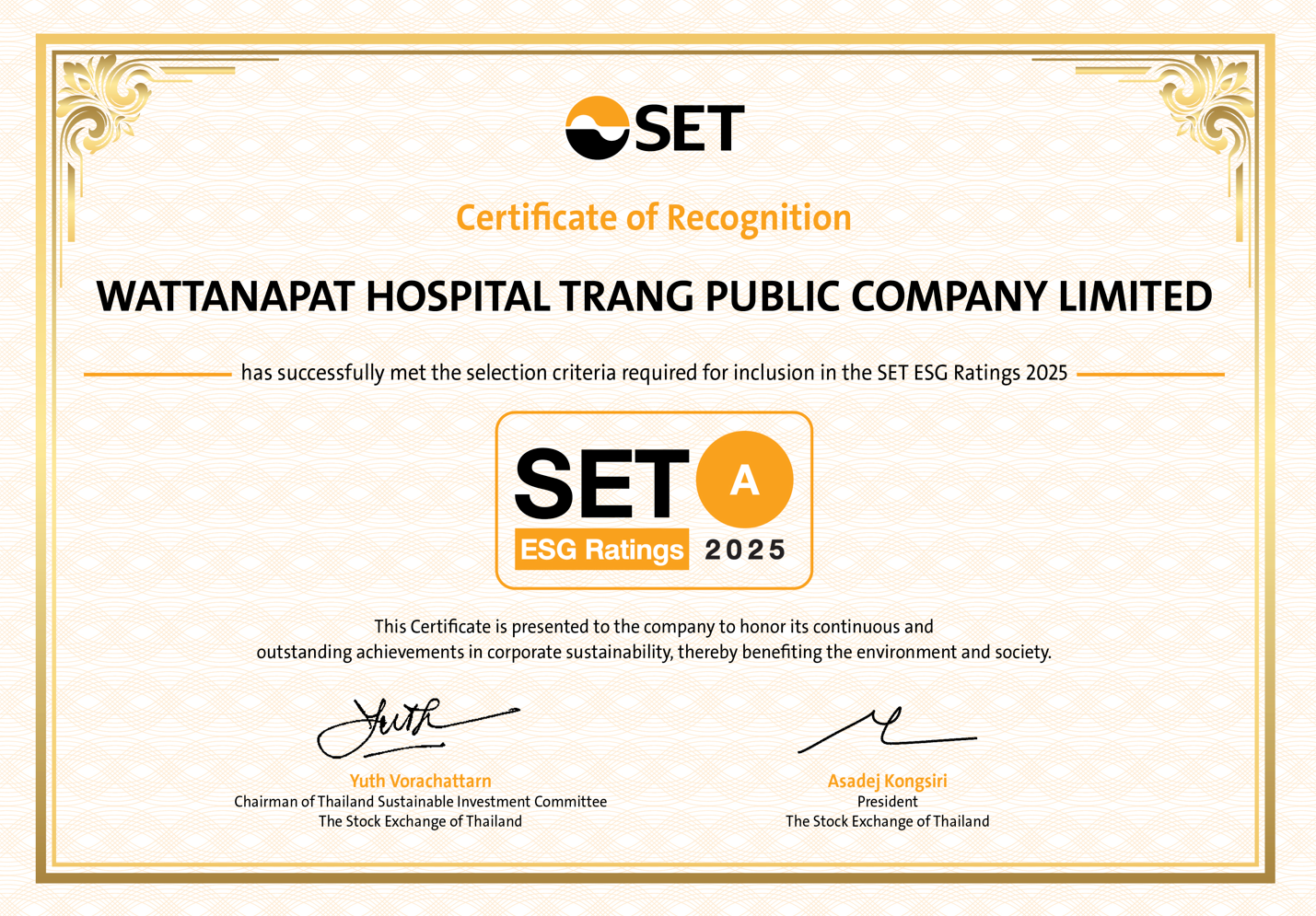
The Board of Directors approved the sustainable development policy and appointed a Sustainable Organizational Development Working Group to serve as the primary mechanism for concretely driving the company's sustainability. The year 2025 marks the first year the company has fully and seriously commenced its sustainability operations. From its operations in 2024, the company received a sustainable stock assessment result. SET ESG Ratings for 2025 at 'A' level and FTSE RUSELL ESG Score 3.5 (ESG Score date: 23 Mar 2026))
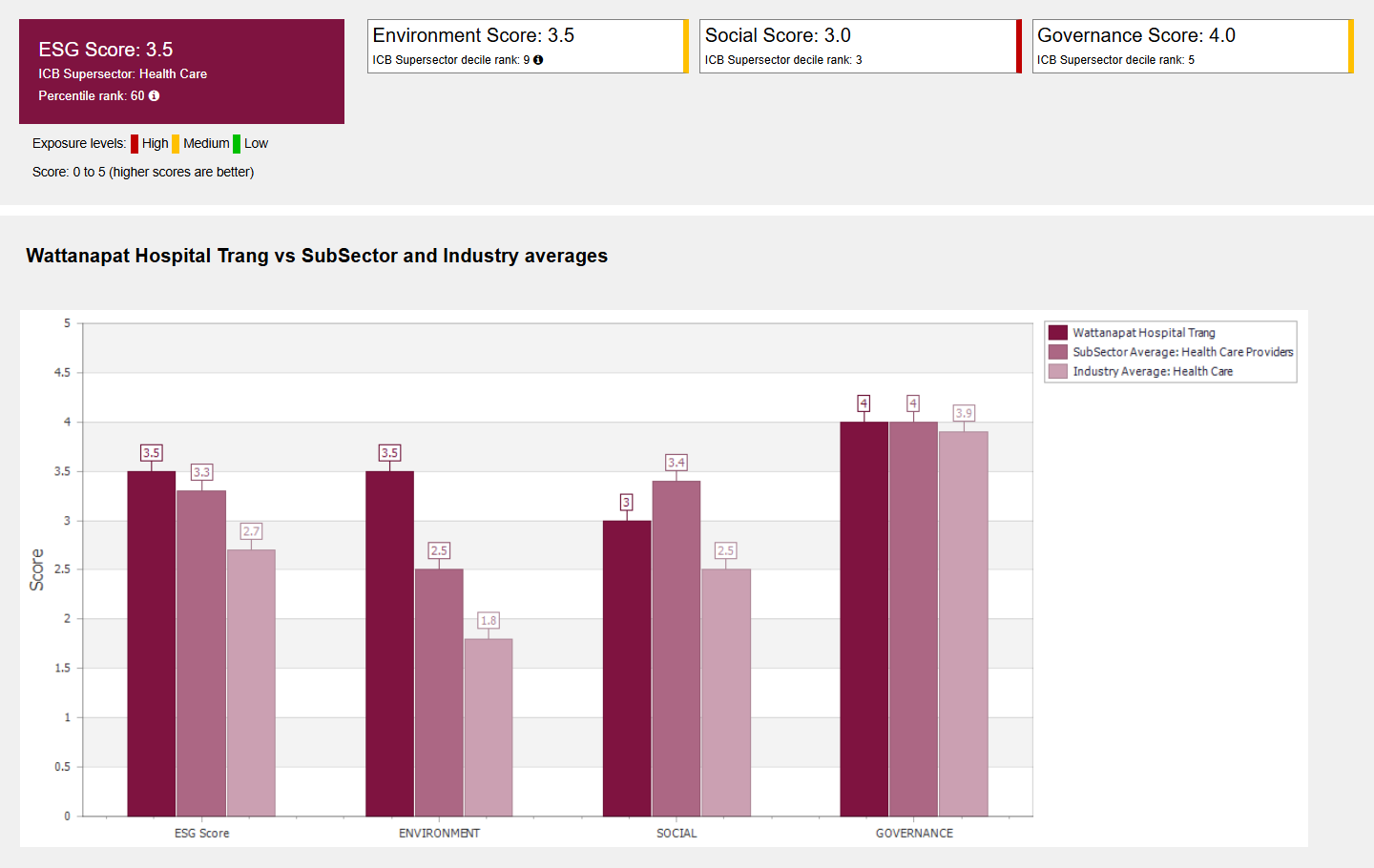
For the year 2026, the company is committed to elevating its sustainability operations to international standards through a more intensive Strategic Milestone plan. It will participate in the sustainability management assessment process with FTSE Russell to reflect the continuous development in policies, governance, and action plans that have been prepared since 2025, aiming to create sustainable value for the company's stakeholders.
Business Value Chain
Value Chain Description
The company prioritizes the management of its business value chain, which serves as a tool to enhance competitive capabilities and mitigate business operational risks related to sustainability issues. The Sustainable Organization Development Working Group conducts an analysis of key activities across all business processes of the organization, concurrently identifying important stakeholders or those with business relationships to these activities. Subsequently, the relationships of information regarding both positive and negative impacts on stakeholders resulting from the organization's activities are analyzed and reviewed.
Stakeholder Analysis
Introduction
The company has reviewed the list of key stakeholders, including both individuals and entities directly and indirectly involved in the company's business operations, covering the entire value chain. The company's stakeholders are categorized into 7 groups: patients, employees, shareholders and investors, business partners, communities, government, and regulatory bodies. Each department is required to design services, communicate, listen, manage, and respond to the opinions and expectations of each group in an appropriate, comprehensive, and timely manner. These comments will be utilized for the continuous and consistent improvement of the company's business. Details of the analysis of key stakeholders along the value chain are provided.
Stakeholder Analysis
| Stakeholder Type | Stakeholders | Stakeholder Expectations | Response to Expectations | Communication Activities |
|---|---|---|---|---|
| External stakeholders | 2923 · Description: Customers | • Medical services of the highest standard and safety
• Provide care with compassion, understanding, and attentiveness
• Seamless and concise supporting services/processes in related areas
• Securely store personal information | • Provide modern tools and technology for medical treatment.
• Offer care and treatment by expert physicians and multidisciplinary professionals.
• Provide related support services, such as patient admission and transfer, and reimbursement according to treatment rights.
• Organize a care team to provide information and answer inquiries.
• Assess patient satisfaction.
• Establish a system for receiving suggestions and listening to patient feedback. | 2940 · Description: Social Event · 2941 · Description: Online Communication · 2942 · Description: Internal Meeting · 2945 · Description: Complaint Reception · 2947 · Description: Satisfaction Survey · 2948 · Description: Training / Seminar |
| External stakeholders | 2899 · Description: Suppliers | • Fair and transparent business operations
• Building sustainable businesses based on mutual benefit | • Has a clear and equitable supplier selection process.
• Has a clear, transparent, and fair procurement process.
• Establishes fair terms and commercial contracts and adheres to them.
• Promotes human rights principles, compliance with labor laws, and anti-corruption practices among partners. | 2941 · Description: Online Communication · 2945 · Description: Complaint Reception · 2947 · Description: Satisfaction Survey |
| Internal stakeholders | 2921 · Description: Employees · 2936 · Other name: Physician · Description: Others · 2936 · Other name: Executive · Description: Others | • Treated with dignity and respect for human rights
• Achieve work-life balance
• Receive compensation and benefits that enable a good quality of life
• Work in a happy and safe environment
• Receive equal opportunities for skill development and career growth
• Achieve job security | Employees and Executives
• Foster a corporate culture of mutual respect and adherence to human rights.
• Comply with labor laws.
• Ensure competitive compensation and benefits within the industry.
• Promote occupational safety and health, and a conducive working environment and atmosphere.
• Develop personnel potential and encourage diverse learning opportunities.
• Implement an effective performance evaluation system for career growth and development.
• Establish channels for reporting workplace safety concerns, including whistleblowing and anonymous complaints.
Physician
• Foster a corporate culture of mutual respect and adherence to human rights.
• Ensure competitive compensation and benefits within the industry.
• Promote occupational safety and health, and a conducive working environment and atmosphere.
• Develop potential and encourage diverse learning opportunities. | 2941 · Description: Online Communication · 2942 · Description: Internal Meeting · 2945 · Description: Complaint Reception · 2946 · Description: Employee Engagement Survey |
| External stakeholders | 2904 · Description: Investors or investment institutions · 2913 · Description: Shareholders | • Operational performance demonstrates business growth
• Sustainable business development and adaptability to future changes
• Transparent and timely disclosure of information
• Protection of rights and equality | • Operate business under good corporate governance policies, ethically, and drive sustainable business operations.
• Organize investor meetings.
• Disclose reports and information transparently. | 2941 · Description: Online Communication · 2944 · Description: Annual General Meeting (AGM) |
| External stakeholders | 2902 · Description: Community · 2928 · Description: Society | • Responsible business conduct
• Promote the quality of life in society | • Fully comply with all laws.
• Cooperate with requests for activities and projects from government agencies and other organizations as legally required and deemed appropriate. | 2940 · Description: Social Event · 2941 · Description: Online Communication · 2945 · Description: Complaint Reception |
| External stakeholders | 2931 · Description: Government agencies and Regulators | • Compliance with Laws
• Support and Participation in Project Activities | • Full compliance with all applicable laws.
• Cooperate with requests for activities and projects from government agencies and other organizations in accordance with legal requirements and as deemed appropriate. | 2938 · Description: Visit · 2941 · Description: Online Communication |
| External stakeholders | 2936 · Other name: Health Partner · Description: Others | • Confidence that referred patients will receive quality treatment in accordance with international standards.
• Fast and secure health record connectivity, reducing data entry redundancy.
• A clear referral system, identifying the primary coordinator and providing a fast track.
• Mutual knowledge/personnel exchange. | • Provide quality treatment in accordance with international standards
• Implement a system that connects health data, ensuring speed, security, and reduced data entry redundancy
• Establish clear referral processes
• Organize joint knowledge-sharing activities | 2940 · Description: Social Event · 2943 · Description: External Meeting · 2948 · Description: Training / Seminar |
Environmental Policy & Guidelines
Has an Environmental Policy
Yes
Policy Description
“Caring for the environment with heart, mindful of organizational sustainability.”
The company is committed to conducting business in conjunction with sustainable environmental conservation, recognizing the importance of reducing environmental impacts from its operations, as well as efficient resource utilization, to create a healthy environment for patients, personnel, and the communities surrounding the company.
Therefore, the company has established 10 environmental policies to guide its operations as follows:
Committed to managing and utilizing resources with maximum efficiency.
Committed to valuing water use, reducing water loss, and treating wastewater before discharge into natural water sources.
Committed to prioritizing waste reduction, waste segregation, waste recycling, and proper waste disposal.
Committed to controlling and preventing air, water, and solid waste pollution resulting from the company's operations.
Committed to conserving ecosystems and biodiversity in the surrounding areas.
Committed to reducing the organization's greenhouse gas emissions (Carbon Footprint for Organization: CFO).
Committed to promoting corporate greenhouse gas reduction activities.
Committed to promoting environmentally friendly products/services or processes that enhance environmental quality.
Committed to promoting renewable energy use, energy conservation, and the application of environmentally friendly technologies.
Committed to environmental and energy management in accordance with international standards and integrating it as part of the organization's operations to comply with relevant laws and other regulations.
Environmental Guidelines
| Guideline | Other — Please Specify |
|---|---|
| Electricity Management | |
| Renewable/Clean Energy Management | |
| Water Management | |
| Waste Management | |
| Biodiversity Management | |
| Greenhouse Gas and Climate Change Management | |
| Others | Transitioning to environmentally friendly products |
Environmental Policy Review
Policy Reviewed This Year
Yes
Review Details
Revision of electricity consumption reduction targets
Previously, in 2024, the target was set for reducing electricity procurement by ≥ 2% per year, revised to: in 2025, the target is set for reducing electricity procurement by ≥ 5% per year compared to the base year (2024).
Revision of waste and refuse management targets
Previously, in 2024, the target was set for increasing waste and refuse recycling by ≥ 0.5%, revised to: in 2025, the target is set for increasing waste and refuse recycling by ≥ 1% per year compared to the base year (2024).
Revision of greenhouse gas emission reduction targets
Previously, in 2024, the target was set for greenhouse gas emission reduction (Scope 1-2) ≥ 5% or 104.22 tCO 2 e revised to: In 2025, the target for greenhouse gas emission reduction (Scope 1–2) is set at ≥ 9% or 187.60 tCO 2 e compared to the base year (2023)
Addition of environmental policies
Additional policies are established regarding the commitment to conserve ecosystems and biodiversity in the surrounding areas of the organization to promote sustainable environmentally friendly operations.
Policies & Guidelines Changed
| Change |
|---|
| Electricity Management |
| Waste Management |
| Biodiversity Management |
| Greenhouse Gas and Climate Change Management |
Energy — Plan & Guidelines
Has an Energy Management Plan
Yes
Plan Description
1. Announce policies or measures regarding energy management or conservation, established by management as organizational policy and publicly disseminated.
2. Appoint a committee, responsible persons, or leaders for energy reduction, especially executives, team leaders, and department heads, to serve as role models in reducing energy consumption.
3. Establish guidelines or measures to reduce energy consumption to instill energy conservation behavior as a culture. 4. Campaign for or promote energy conservation and stimulate a sense of responsibility among personnel to be aware of using energy economically and efficiently.
5. Inspect and maintain electrical equipment to ensure readiness for use, enabling maximum energy efficiency and compliance with standards. 6. Organize Energy Conservation Day activities or activities that promote and continuously encourage implementation. 7. Stipulate that the procurement of electrical equipment must bear the Energy Saving No. 5 label and be environmentally friendly.
8. Announcement of the Audit Committee (5S activities, waste separation activities, energy conservation activities) in accordance with the guidelines for developing activities % Achieve Environment Score.
Energy — Electricity Consumption
Electricity Consumption
| Metric | Current Year | Previous Year | Two Years Ago |
|---|---|---|---|
| Total electricity consumption within the organization (Kilowatt-Hours) | 3,539,655 | 3,805,740 | 3,645,822 |
| Electricity purchased for consumption from non-renewable energy sources (Kilowatt-Hours) | 3,539,655 | 3,805,740 | 3,645,822 |
| Electricity purchased or generated for consumption from renewable energy sources (Kilowatt-Hours) | 0 | 0 | 0 |
Energy — Fuel Consumption
Introduction
The company utilizes fuels, namely diesel for generators to serve as the hospital's backup power system, and gasoline for vehicles. Furthermore, the company has introduced electric vehicles within the hospital to provide transportation services for patients between buildings.
Fuel Consumption
| Metric | Current Year | Previous Year | Two Years Ago |
|---|---|---|---|
| Crude oil (Barrels) | 0 | 0 | 0 |
| Coal (Metric tonnes) | 0 | 0 | 0 |
| Jet fuel (Litres) | 0 | 0 | 0 |
| Diesel (Litres) | 59,787 | 50,406.31 | 49,951.63 |
| Gasoline (Litres) | 3,745 | 5,393.57 | 4,536.44 |
| Fuel oil (Litres) | 0 | 0 | 0 |
| Natural gas (Standard cubic feet) | 0 | 0 | 0 |
| LPG (Kilograms) | 0 | 0 | 11,880 |
| Steam (Metric tonnes) | 0 | 0 | 0 |
Energy — Targets
Has Set Targets
Yes
Targets
| Target | Base Year | Base Year Value | Target Year | Target Year Value | Target Change (%) | Unit |
|---|---|---|---|---|---|---|
| Reduction of electricity purchased for consumption | 2,024 | 3,805,740 | 2,025 | 190,287 | 5 | Kilowatt-hour |
Energy — Performance & Outcomes
Has Performance Results
Yes
Performance Description
Comparing electricity consumption in 2025 with 2024, a 6.99% reduction in electricity usage was observed. This outcome resulted from a comprehensive focus on implementing energy conservation measures throughout the company's operational process chain, including the establishment of Performance Indicators for all departments, with a committee overseeing, monitoring, and evaluating these energy conservation activities.
Furthermore, activities to reduce greenhouse gas emissions are promoted under the Low Emission Support Scheme (LESS) project, with key activities detailed as follows:
1. Electricity consumption reduction activities, including measures such as setting air conditioner operating hours, unplugging electrical appliances when not in use, and installing automatic light on/off systems, among others.
2. Activities for generating electricity from renewable energy for self-consumption.
3. Installation of high-efficiency air conditioners to replace existing ones
4. Replacement of lighting fixtures to enhance efficiency
Water — Plan & Guidelines
Has a Water Management Plan
Yes
Plan Description
Implementation in specific areas
The company has implemented water reduction measures in departments with high water consumption, focusing on increasing efficiency in specific processes, such as:
- Installation of touchless automatic faucets in common areas to reduce unnecessary water consumption.
- Improvement of water production processes by reusing water from the backwash process of sand and resin filtration systems to enhance water management efficiency in areas with high water consumption.
Company-wide implementation
The company implements organization-wide water management measures, regularly monitoring and tracking water consumption. The focus is on reducing water consumption per patient-day, as well as promoting the reuse of treated water that meets standard criteria, such as for watering plants and cleaning areas within the hospital, instead of drawing water from the filtration process. Performance results are continuously reported to the Environmental and Safety Management Committee.
Water — Withdrawal, Discharge & Consumption
Water Withdrawal, Discharge & Consumption
| Metric | Current Year | Previous Year | Two Years Ago | Remark |
|---|---|---|---|---|
| Total water withdrawal (Cubic meters) | 74,892 | 67,611 | 49,598 | |
| Total water withdrawal by third-party water (Cubic meters) | 7,528 | 6,886 | 30,118 | According to statistical data on tap water consumption from the Provincial Waterworks Authority, Trang Branch, it was found that during 2022-2023, the consumption rate was higher than that of groundwater. This was due to the hospital's construction of a parking building and renovation of its water production system, which led to the temporary suspension of the groundwater production system during certain periods. |
| Total water withdrawal by surface water (Cubic meters) | 0 | 0 | 0 | |
| Total water withdrawal by groundwater (Cubic meters) | 67,364 | 60,725 | 19,480 | |
| Total water withdrawal by seawater (Cubic meters) | 0 | 0 | 0 | |
| Total water withdrawal by produced water (Cubic meters) | 0 | 0 | 0 | |
| Percentage of wastewater treated before discharge (%) | 100 | 100 | 100 | |
| Total water discharge (Cubic meters) | 62,277 | 54,088.8 | 39,678.4 | |
| Total water discharge to third-party water (Cubic meters) | 0 | 0 | 0 | |
| Total water discharge to surface water (Cubic meters) | 62,277 | 54,088.8 | 39,678.4 | |
| Total water discharge to groundwater (Cubic meters) | 0 | 0 | 0 | |
| Total water discharge to seawater (Cubic meters) | 0 | 0 | 0 | |
| Total water consumption (Cubic meters) | 12,615 | 13,522.2 | 9,919.6 | |
| Recycled water (Cubic meters) | 7,489 | 5,408.88 | 3,967.4 |
Water — Targets
Has Set Targets
Yes
Targets
| Target | Base Year | Base Year Value | Target Year | Target Year Value | Target Change (%) | Unit | Unit — Please Specify |
|---|---|---|---|---|---|---|---|
| Reduction of water consumption | 2,024 | 2.16 | 2,025 | 0.02 | 1 | Other | cubic meters per person |
Water — Performance & Outcomes
Has Performance Results
Yes
Performance Description
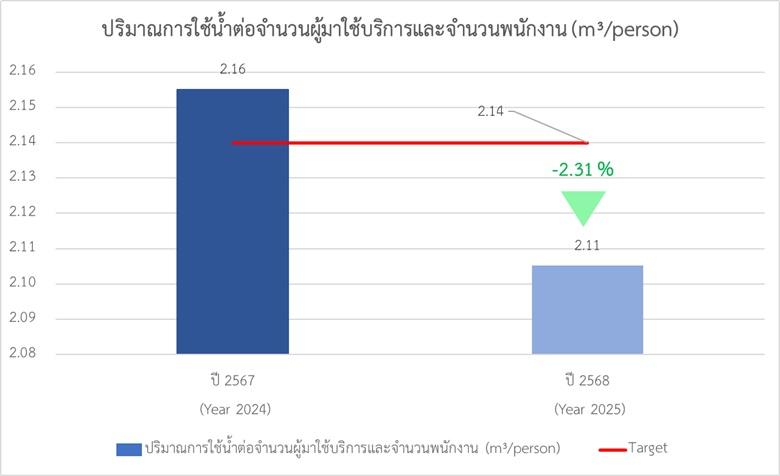
From the operational results in 2025, it was found that the hospital's total water consumption was 74,892 cubic meters with a total number of service recipients and employees 35,575 people representing an average water consumption rate of 2.11 cubic meters per person Compared to 2024, which had a total water consumption of 67,611 cubic meters and the total number of service recipients and employees 32,080 people representing an average water consumption rate of 2.16 cubic meters per person it was found that the per capita water consumption rate decreased by 2.31% which resulted from focusing on water conservation measures within the company and raising environmental awareness regarding water conservation practices in accordance with the environmental policy by communicating water conservation guidelines in accordance with the environmental policy of the company continuously, including campaigns through the internal intranet system. the company
This efficient water management is considered one of the organization's key strategic plans for driving sustainability operations and supporting the long-term optimal utilization of resources.
Waste — Plan & Guidelines
Has a Waste Management Plan
Yes
Plan Description
1. Increase donation points to serve as distribution centers for external organizations in need.
2. Provide knowledge and understanding of various waste management methods by applying the 3Rs principle (Reduce - use less, think before using; Reuse - use repeatedly, use again; Recycle - reuse, bring back for new use).
3. Create an environmental culture for proper waste disposal by type and category.
4. Organize activities to encourage employee participation, such as Turn recyclable waste within the organization into value.
5. Collect waste sorting data using the Application (ECOLIFE) under the TING TO TRASH project.
Waste — Generation, Disposal & Recycling
Waste Generation, Disposal & Recycling
| Metric | Current Year | Previous Year | Two Years Ago | Remark |
|---|---|---|---|---|
| Total waste generated (Kilograms) | 133,876.54 | 143,149 | 131,423 | |
| Non-hazardous waste (Kilograms) | 92,656.54 | 98,136 | 86,576 | |
| Non-hazardous waste - Landfilling (Kilograms) | 29,712.54 | 33,440 | 31,350 | |
| Non-hazardous waste - Incineration (with energy recovery) (Kilograms) | 0 | 0 | 0 | |
| Non-hazardous waste - Incineration (without energy recovery) (Kilograms) | 41,220 | 45,013 | 44,847 | |
| Non-hazardous waste - Other disposal operations (Kilograms) | 21,724 | 19,683 | 10,379 | Waste and discarded materials for reuse (Recycle) |
| Hazardous waste (Kilograms) | 41,220 | 45,013 | 44,847 | |
| Hazardous waste - Landfilling (Kilograms) | 0 | 0 | 0 | |
| Hazardous waste - Incineration (with energy recovery) (Kilograms) | 0 | 0 | 0 | |
| Hazardous waste - Incineration (without energy recovery) (Kilograms) | 41,220 | 45,013 | 44,847 | |
| Hazardous waste - Other disposal operations (Kilograms) | 0 | 0 | 0 | |
| Total reused/recycled waste (Kilograms) | 21,724 | 19,683 | 10,379 | |
| Reused/Recycled non-hazardous waste (Kilograms) | 21,724 | 19,683 | 10,379 | |
| Reused non-hazardous waste (Kilograms) | 0 | 0 | 0 | |
| Recycled non-hazardous waste (Kilograms) | 21,724 | 19,683 | 10,379 | |
| Reused/Recycled hazardous waste (Kilograms) | 0 | 0 | 0 | |
| Reused hazardous waste (Kilograms) | 0 | 0 | 0 | |
| Recycled hazardous waste (Kilograms) | 0 | 0 | 0 |
Waste — Targets
Has Set Targets
Yes
Targets
| Waste Type | Disposal Approach | Target | Base Year | Base Year Value | Target Year | Target Year Value | Target Change (%) | Unit |
|---|---|---|---|---|---|---|---|---|
| Non-hazardous waste | 2758 · Description: Reuse · 2759 · Description: Recycle | Reduce waste volume | 2,024 | 98,136 | 2,025 | 981.36 | 1 | Kilograms |
Waste — Performance & Outcomes
Has Performance Results
Yes
Performance Description
Company Waste and waste management in business operations are systematically conducted according to the 3Rs principles (Reduce, Reuse, Recycle). There is an efficient waste sorting system by type, coupled with raising awareness and participation among stakeholders through the "Boworn: Baan Morwit, Temple, School" project, which is the starting point for waste separation, aiming to reduce waste disposal in 2025.
From the operational results, it was found that the volume of non-hazardous waste decreased by 5.58% from the baseline year, and the volume of sorted recyclable waste increased by 10.37% compared to the baseline year.
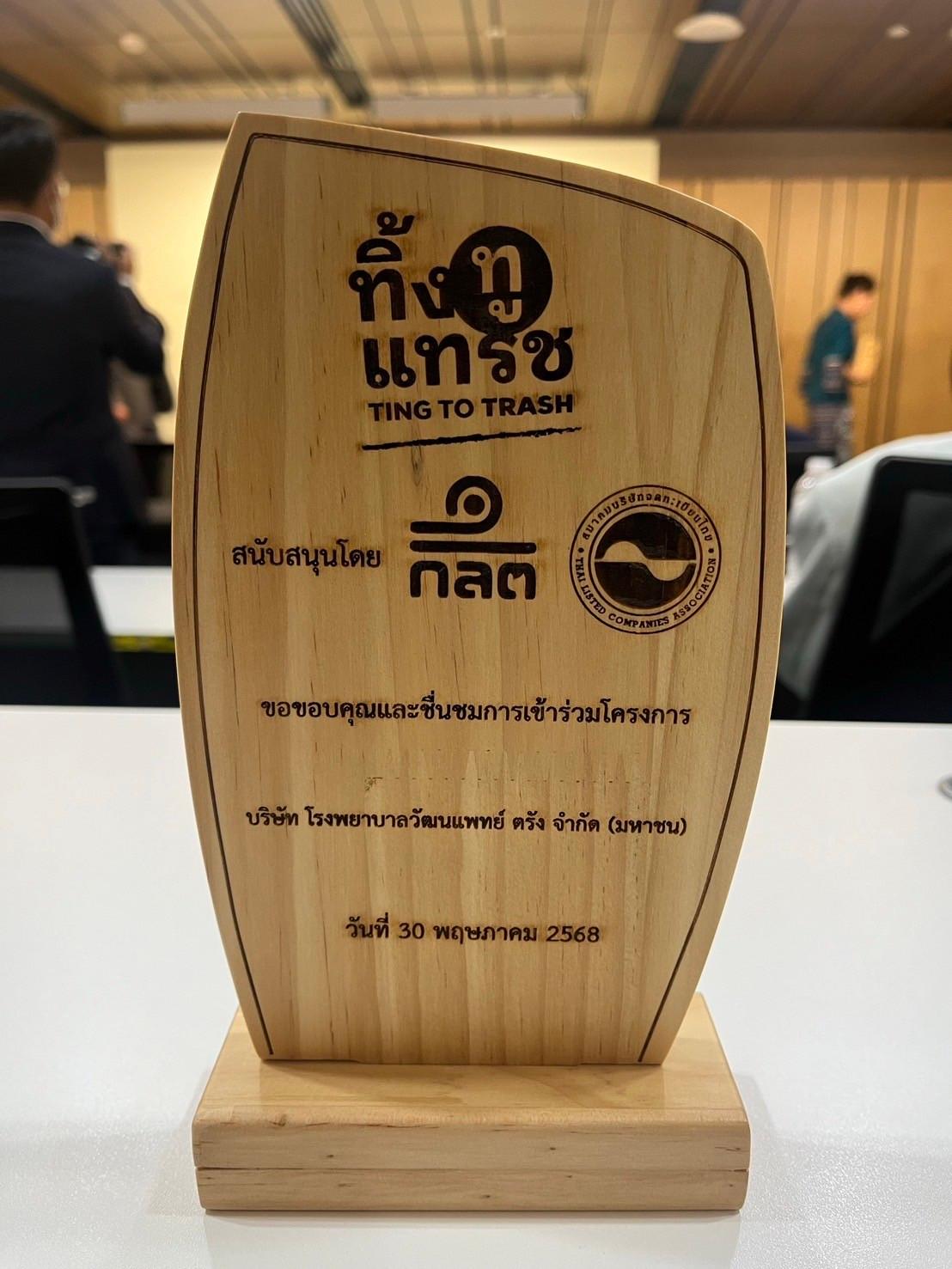
The company received an award in the Ting To Trast project from the Securities and Exchange Commission. on May 30, 2025, as well.
GHG — Plan & Guidelines
Has a GHG Management Plan
Yes
Plan Description
1. Reducing indirect greenhouse gas emissions (Scope 2) by utilizing electricity from solar cells, promoting electricity conservation among company staff, and providing knowledge on energy conservation, etc.
2. Analyzing the greenhouse gas emission chain within the company's operations.
3. Utilizing environmentally friendly products and services to reduce greenhouse gas emissions.
4. Fostering participation in reducing greenhouse gas emissions in accordance with the company's strategic plan.
5. Reducing the amount of waste generated and promoting 3Rs activities
6. Promoting greenhouse gas reduction activities under the Low Emission Support Scheme (LESS).
GHG — Emissions
GHG Emissions
| Metric | Current Year | Previous Year | Two Years Ago |
|---|---|---|---|
| Total GHG emissions (Metric tonnes of carbon dioxide equivalent) | 1,990 | 2,190.33 | 2,084.42 |
| Total greenhouse gas emissions 1 (Metric tonnes of carbon dioxide equivalent) | 260 | 285.86 | 261.87 |
| Total greenhouse gas emissions 2 (Metric tonnes of carbon dioxide equivalent) | 1,730 | 1,904.47 | 1,822.55 |
| Total greenhouse gas emissions 3 (Metric tonnes of carbon dioxide equivalent) | 0 | 0 | 0 |
GHG — Emissions Verification
Emissions Verified by a Third Party
Yes
Verifying Body
2646
GHG — Principles & Standards
Principles & Standards Applied
| Standard |
|---|
| 2671 |
| 2676 |
GHG — Targets
Has Set GHG Targets
Yes
GHG Targets — Other Targets
Other GHG Targets
| Emission Scope | Base Year | Base Year Emissions | Near-term Target Year | Near-term Target Value | Near-term Target Change (%) | Long-term Target Year | Long-term Target Value | Long-term Target Change (%) | Target Year | Target Year Emissions | Target Change (%) | Unit |
|---|---|---|---|---|---|---|---|---|---|---|---|---|
| 2715 | 2,023 | 2,084.42 | 2,025 | 187.6 | 9 | 2,027 | 208.44 | 10 | 2,025 | 187.6 | 9 | Metric tonnes of carbon dioxide equivalent |
GHG — Performance & Outcomes
Has Performance Results
Yes
Performance Description
The Company places significant importance on greenhouse gas (GHG) management and reduction. It has identified that the primary source of GHG emissions from its business operations arises from electricity consumption, particularly from air conditioning systems within the organization. Accordingly, the Company has implemented continuous maintenance measures for air conditioning systems in line with its energy conservation plan and has established a plan to replace existing equipment with energy-efficient alternatives by 2026.
For 2025, the Company set a target to reduce net greenhouse gas emissions by no less than 9% compared to the base year (2023). However, actual performance showed a reduction of 4.53%, indicating a decreasing trend, although still below the established target. Nevertheless, the Company began utilizing renewable energy for internal consumption, including solar energy, in the fourth quarter of 2025, alongside the implementation of various energy conservation measures.
Furthermore, the Company has been registered and certified with the Carbon Footprint label by the Thailand Greenhouse Gas Management Organization (Public Organization) on March 18, 2026.
Environmental Legal Incidents
Legal Violation Incidents
| Metric | Current Year | Previous Year | Two Years Ago |
|---|---|---|---|
| Number of cases or incidents of legal violations or negative environmental impact (cases) | 0 | 0 | 0 |
Other Environmental Management
Plan Description
Food waste and organic waste management of the company
From daily data collection, the average amount of food waste remaining after consumption is 5-10 kilograms/day, or approximately 3,600 kilograms/year. This is a significant amount, and without proper management, it would contribute to greenhouse gas emissions. Therefore, a sustainable environmental cycle project has been organized, involving waste separation where liquid waste is used to make fertilizer, and fibrous waste is used to make organic compost produced using efficient microorganisms: Bokashi. This initiative also extends to becoming an employee learning center under the project name "Din Choi model" Once agricultural produce is obtained, it will be distributed to neighboring communities and employees.
In addition, there is a plan to implement the use of microorganisms from food waste compost in public restrooms and employee restrooms to help reduce odors originating from the restrooms. This also helps accelerate the decomposition of organic matter in the hospital's wastewater treatment system, and involves using biological EM instead of chemical-based floor cleaners in public restrooms, employee restrooms, and staff work areas, among others.
Employees — Plan & Guidelines
Has an Employee Management Plan
Yes
Plan Description
The company has social and human rights plans related to employees and labor, customers, communities, and society in conducting business throughout the value chain. This reflects the company's ability to create satisfaction for employees, labor, customers, communities, and society. In the past year, there have been no complaints or labor disputes. In terms of society and respect for human rights, in addition to employees, there is a survey of employee engagement. The target is 75 percent from the 2025 survey results. The result exceeded the target, which is 78.19 percent.
Plan Areas
| Plan Area |
|---|
| Fair employee compensation |
| Employee training and development |
| Promoting employee relations and participation |
| Migrant/foreign labor |
| Child labor |
| Occupational health and safety in workplace |
Employees — Workforce
Workforce Data
| Metric | Current Year | Previous Year | Two Years Ago |
|---|---|---|---|
| Total number of employees (Persons) | 557 | 533 | 513 |
| Number of male employees (Persons) | 88 | 86 | 91 |
| Number of female employees (Persons) | 469 | 447 | 422 |
| Total employment of disabled persons (people) | 5 | 5 | 5 |
| Total disabled employees (people) | 5 | 5 | 5 |
| Total male disabled employees (people) | 3 | 3 | 3 |
| Total female disabled employees (people) | 2 | 2 | 2 |
| Total disabled workers who are non-employee (people) | 0 | 0 | 0 |
| Contributions to the fund for promoting and improving the quality of life for disabled persons | 1 | 0 | 0 |
| Total number of male employees in operational level (Persons) | 78 | 76 | 81 |
| Total number of male employees in management level (Persons) | 8 | 7 | 6 |
| Total number of male employees in executive level (Persons) | 2 | 3 | 4 |
| Total number of female employees in operational level (Persons) | 449 | 430 | 407 |
| Total number of female employees in management level (Persons) | 17 | 15 | 13 |
| Total number of female employees in executive level (Persons) | 3 | 2 | 2 |
Employees — Remuneration & Provident Fund
Remuneration & Provident Fund
| Metric | Current Year | Previous Year | Two Years Ago |
|---|---|---|---|
| Total disabled employees (people) | 226,875,262.48 | 142,029,459.58 | 135,433,705.65 |
| Total male employee remuneration (Baht) | 42,112,546.62 | 31,159,751.44 | 36,272,996.2 |
| Total female employee remuneration (Baht) | 184,762,715.86 | 110,869,708.14 | 99,160,709.45 |
| Number of employees eligible to participate in PVD (persons) | 389 | 379 | 388 |
| Total number of employees joining employee provident fund (Persons) | 291 | 286 | 292 |
| Percentage of total number of employees joining employee provident fund to total number of employees (%) | 52.24 | 53.66 | 56.92 |
| Number of PVD members / Total eligible employees (%) | 74.81 | 75.46 | 75.26 |
| Total amount of provident fund contributed by the Company (Baht) | 236,593.5 | 235,430.08 | 228,903 |
| Total amount of provident fund contributed by employee (baht) | 438,978.26 | 441,151.1 | 423,015.88 |
Employees — Training & Development
Training Data
| Metric | Current Year | Previous Year | Two Years Ago |
|---|---|---|---|
| Average employee training hours (Hours / Person / Year) | 45 | 48 | 45 |
| Employee development and training expenses (baht) | 2,040,926.25 | 1,948,000 | 1,128,000 |
Employees — Occupational Health & Safety
Occupational Health & Safety Data
| Metric | Current Year | Previous Year | Two Years Ago |
|---|---|---|---|
| Total number of lost time injury incidents by employees (Cases) | 0 | 0 | 0 |
Employees — Labour Relations
Labour Relations Data
| Metric | Current Year | Previous Year | Two Years Ago |
|---|---|---|---|
| Total voluntary resignations (Persons) | 74 | 88 | 60 |
| Male employees who voluntary resigned (Persons) | 3 | 11 | 4 |
| Female employees who voluntary resigned (Persons) | 71 | 77 | 56 |
| Percentage of employee turnover leaving the Company voluntarily (%) | 13.29 | 16.51 | 11.7 |
| Evaluation result of employee engagement | 1 | 1 | 1 |
Employees — Employee Representation
Employees Are Represented Collectively
Yes
Forms of Representation
| Form |
|---|
| Welfare committee |
Employees — Targets
Has Set Employee Targets
Yes
Targets
| Indicator | Target Areas | Base Year | Base Year — Description | Target Year | Target Year — Description |
|---|---|---|---|---|---|
| Employee engagement | 2985 · Description: Promoting employee relations and participation | 2,024 | Employee engagement rate above 75% | 2,025 | Employee engagement rate above 75% |
| Unfair Compensation Complaint | 2983 · Description: Fair employee compensation | 2,024 | Unfair compensation claims equal to 0 | 2,025 | Unfair compensation claims equal to 0 |
| Average training hours/person/year | 2984 · Description: Employee training and development | 2,024 | The average training hours per person per year are more than 45 hours. | 2,025 | The average training hours per person per year are more than 45 hours. |
| Number of work-related injuries resulting in time off | 2988 · Description: Safety and occupational health at work | 2,024 | The number of work-related injuries resulting in lost time is equal to 0. | 2,025 | The number of work-related injuries resulting in lost time is equal to 0. |
Employees — Performance & Outcomes
Has Performance Results
Yes
Performance Description
Company Treat employees and workers with respect for human rights. This may include fair employment and compensation, employee training and development, employee engagement and satisfaction, occupational safety and health, and workplace environment management. It also demonstrates efforts to mitigate risks in employee and labor disputes to maintain competitiveness, attract potential employees, and develop employee engagement. For example, the company adheres to human rights principles from recruitment to employee and personnel care to ensure that all employees and personnel feel like they are part of the same family. In 2024, the company's human resource management focused on recruiting and selecting qualified individuals who meet the organization's criteria, have attitudes and mindsets that align with the organization's culture and direction, enhance and develop personnel to have the knowledge and skills to apply to their work in a timely manner, keeping pace with the ever-changing environment, creating ideas for a happy life, having a public mind, and building confidence and stability in work, seeing a clear career path to increase motivation in developing the potential of each employee, including taking care of basic needs, creating a happy workplace for employees to have the morale to perform their duties well, efficiently, and to focus on developing the knowledge and abilities of personnel, strengthening organizational culture, engagement, satisfaction, and promoting health in personnel. The Human Resources Committee has established a human resource management policy of "Recruiting good people, creating competent people, and having happiness at work" to achieve the hospital's main objectives.
Good people Disciplined, honest, with good attitudes and behavior, moral, ethical, and socially responsible.
Competent people Continuous learning and self-development
Happiness at work Enhance the quality of work-life balance between personal and work life.
The main operations are as follows:
Workforce Planning
The Company conducts an annual review of its workforce planning. This process involves analyzing and forecasting the number of employees required and the types of skills needed over specific periods to ensure that the organization has the right people in the right roles at the right time, while optimizing budget utilization.Recruitment and Selection
The Company is committed to recruiting and appointing qualified personnel with appropriate competencies, experience, and required qualifications for suitable positions. The selection process includes interviews, knowledge assessments, and emotional or behavioral evaluations. The Company ensures that its recruitment and selection processes are conducted in an equitable and fair manner to obtain employees who are both efficient and effective in their performance. The process consists of the following:Internal Recruitment: Internal recruitment is promoted to support employee growth and strengthen organizational engagement.
External Recruitment: In 2025, the Company conducted assessments, planning, and implemented strategic recruitment initiatives as follows:
Social Media Recruiting
The Company utilizes social media platforms such as LinkedIn, Facebook, and TikTok to reach and engage potential candidates.Recruitment Marketing
The Company develops engaging content to enhance visibility and attract a broader pool of candidates.Employee Branding
The Company promotes its employer brand by communicating the value of working at the organization, leveraging real employees as ambassadors to share authentic workplace experiences and culture, thereby attracting external talent.
Employment: The Company places importance on transparent and fair employment practices, adhering to the principles of respect for human rights and equality. The Company does not tolerate any form of discrimination based on nationality, religion, language, age, gender, marital status, pregnancy, race, disability, or sexual diversity.
All employment-related processes, including compensation, working hours and leave, job assignments, performance evaluation, training and development, and career advancement planning, are conducted without discrimination.
Employee Development: The company focuses on continuously enhancing employees' knowledge, skills, and self-development. Training is a key part of the employee development process, aimed at improving job-specific performance by increasing knowledge, skills, and attitudes. This contributes to higher work standards, career advancement, and the achievement of organizational goals. Learning needs are identified to determine training topics, and HR integrates work-related risk data in the analysis for training outcomes. In 2025, the company offered 129 external training courses, 19 mandatory internal courses, and 420 department-specific courses. The average training hours per employee were 45 hours per year, exceeding the target of 45 hours per employee.
Occupational Health, Safety, and Working Environment: The company continuously improves its safety operations to reduce risks of illness, injury, or death, while ensuring proper care for employees' quality of life. Key initiatives include enhancing the workplace, improving lighting, increasing green spaces for health and safety, and creating a conducive, comfortable working environment (Healthy Workplace). The goal is to ensure employee health and safety. The company has nine emergency plans in place, including: CPR, fire prevention and suppression, mass casualty, child abduction, physical assault, fall prevention, computer failure, chemical spills, and disaster management plans (natural disasters, pandemics, emerging diseases).
Health Promotion: The Company promotes employee health and well-being by providing pre-employment health check-ups and annual health examinations, categorized by age group. Health promotion initiatives include exercise programs, immunization, and campaigns to reduce Body Mass Index (BMI).
The Company also prioritizes infection prevention and control to ensure employee safety. Measures have been established to minimize the risk of infection among personnel, including the issuance of guidelines on the use of personal protective equipment (PPE), along with training, supervision, and monitoring to ensure compliance. In addition, the Company enhances employee immunity through vaccination programs, such as influenza and hepatitis B vaccines, and continues to provide annual health check-ups.
Through these health promotion activities, the Company has been recognized with an award as a model organization for workplace health promotion
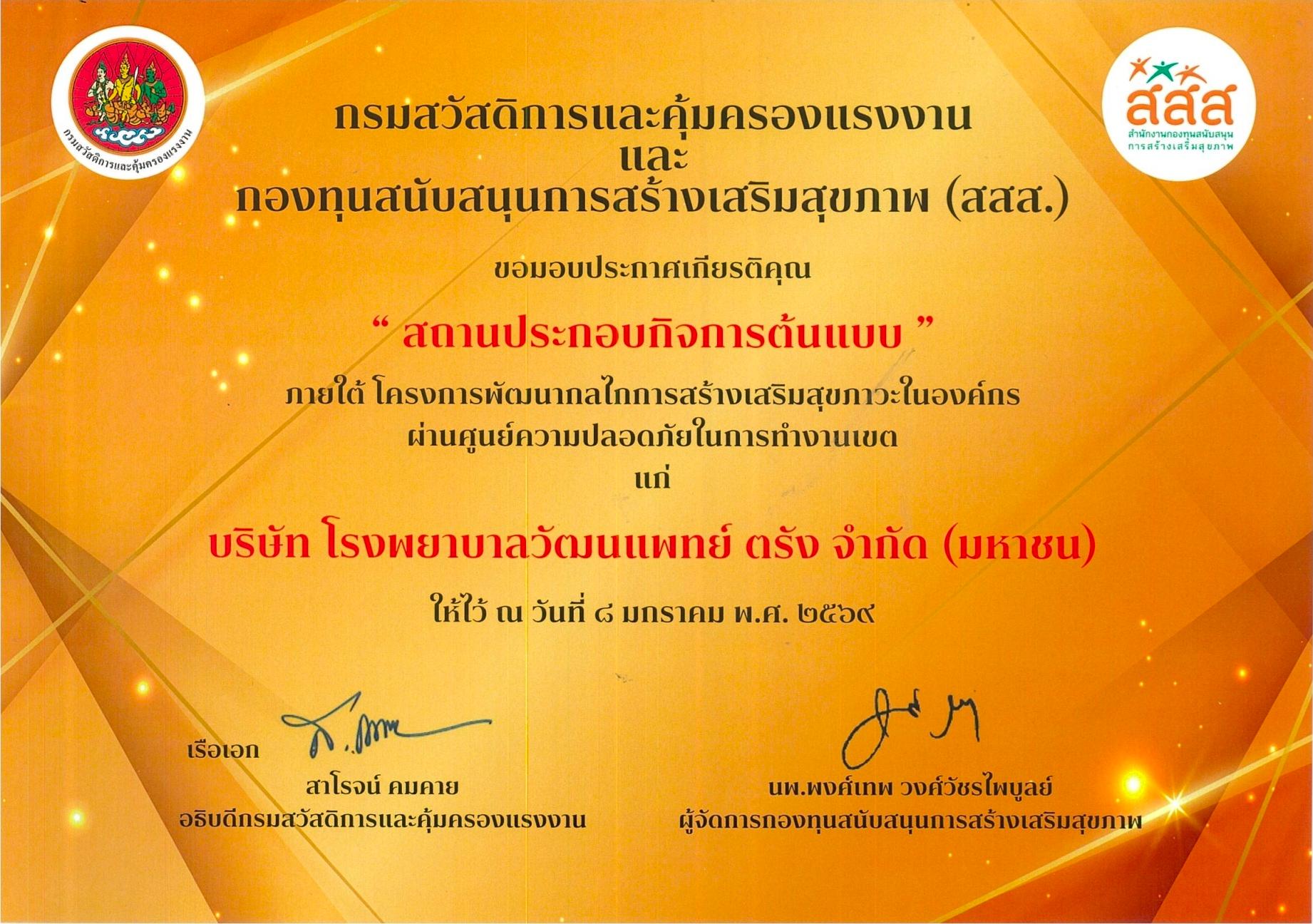
Employee Well-being and Engagement: The Company believes that organizations that promote both physical and mental well-being among employees can achieve higher levels of performance. The Company focuses on personnel development, process improvement, and workplace safety, alongside organizing various activities to enhance employees’ happiness in their daily work. Employees are encouraged to feel valued and recognized for their contributions, maintain positive relationships with colleagues, and achieve a healthy work-life balance, enabling them to return home without stress at the end of each day. These factors contribute to effective performance and the achievement of organizational goals.
The Company has established employee engagement development plans to foster happiness and unity within the organization. Initiatives include providing a clean, safe, and well-organized workplace environment, implementing 5S activities, and organizing various programs such as the “Wattanapat People of Excellence” program, Role Model program, mentoring programs, and cross-departmental support initiatives. Additional activities include birthday celebrations, Ramadan activities, year-end celebrations, and retirement ceremonies.
In 2025, the Company recognized the importance of newly hired employees and set a target to reduce turnover among new hires. Accordingly, the Company developed onboarding processes and employee care plans from the first day (or prior to commencement of employment) to help new employees adapt quickly to the team, organizational culture, and work systems, with the aim of reducing turnover during the first 90 days (probation period).
Employee engagement in 2025 was measured at 78.19%, exceeding the target of 75%. The Company provides various employee benefits to strengthen engagement and long-term commitment, including a provident fund scheme, uniform allowance, medical benefits, annual health check-ups, vaccination programs, and policies promoting employee health and well-being. In addition, the Company encourages employees to participate in social contribution activities, such as volunteer programs, community health outreach services, and temple development initiatives.
The Company also organizes various welfare and recognition activities, including birthday celebrations, employee recognition programs, and festive events such as Songkran, Ramadan, the Company’s anniversary, retirement ceremonies, New Year celebrations, and morale-boosting events.
At the Board of Directors’ meeting held on November 14, 2025, the Company approved the Employee Joint Investment Program (EJIP), a co-investment scheme between the Company and its employees. Under this program, employees voluntarily participate in regularly investing in the Company’s shares listed on the Stock Exchange of Thailand through a dollar-cost averaging approach. This program serves as an additional employee benefit and supports long-term financial security for employees.
Career Development and Advancement: The Company has established career path policies to support employee growth and advancement. In 2025, the Company officially launched its Talent Management Program, which includes an open application process and screening assessments covering both knowledge and mindset. The Company believes that being a “talent” is not defined solely by skills or knowledge, but also by the willingness to grow together with the organization.
In 2025, the Company’s voluntary turnover rate was 13.29%, representing a decrease of 3.22% compared to the previous year. The Company also promotes inclusive employment by supporting the hiring of persons with disabilities. In 2025, the Company employed 5 persons with disabilities, accounting for 0.90% of its total workforce.
The Company is committed to complying with labor laws by effectively managing regular working hours and overtime in accordance with legal requirements. In parallel, the Company has implemented proactive policies aimed at eliminating and reducing excessive working hours, thereby promoting employee well-being and work-life balance.
Although the Company faces industry-wide challenges related to the shortage of professional nursing personnel, which may impact the management of overtime hours during certain periods, the Company remains committed to its policy of minimizing excessive working hours. This is achieved by prioritizing employee well-being alongside patient safety through the following mechanisms:
Proactive Workforce Management Approaches
Workload prioritization and redistribution: Implementation of workforce management systems to ensure fair workload distribution and adequate rest periods between shifts, thereby reducing fatigue
Talent attraction and retention policies: Strengthening recruitment and retention strategies to achieve optimal staffing levels and sustainably reduce overtime hours
2.1 “Friend Get Friend” Recruitment Program: The Company implements a “Friend Get Friend” recruitment program to foster employee engagement in talent acquisition by leveraging internal networks. This initiative aims to attract high-potential candidates who align with the Company’s organizational culture on a continuous basis.
2.2 Professional Workforce Development: The Company supports the development of professional personnel through nursing scholarship programs, aimed at expanding educational opportunities and strengthening the long-term nursing workforce. This initiative enhances career stability and supports the future expansion of healthcare services.
2.3 Long-term Incentive and Employee Engagement: The Company promotes employee engagement and shared benefits through long-term incentive programs, including the Employee Joint Investment Program (EJIP). This initiative encourages a sense of ownership among employees and supports the retention of highly skilled personnel over the long term.
2.4 Employee Joint Investment Program (EJIP): The Company has implemented the Employee Joint Investment Program (EJIP) to further strengthen employee ownership and long-term commitment. The program not only enhances financial security and effective savings plans for employees but also serves as a key retention mechanism for professional and high-potential personnel, particularly in the context of industry-wide workforce shortages. The Company believes that sustainable organizational growth must go hand in hand with the financial well-being and happiness of its employees.
2.5 Enhancement of Medical Welfare Benefits:The Company has improved its employee healthcare benefits by 33.33% compared to the previous level, in order to enhance employee well-being and support overall quality of life.
Technology Investment: The Company has implemented smart health information systems to reduce administrative workload (paperwork), enabling nurses to focus more on patient care and minimizing unnecessary overtime hours.
Proactive Health and Well-being Management: The Company provides regular health check-ups and burnout assessments for nurses working in high-demand departments. In addition, enhanced welfare and support measures are provided to recognize and compensate their dedication.
The Company has set a target to continuously reduce overtime hours, supported by a workforce planning strategy aimed at achieving a nursing staffing level of over 95% adequacy. This initiative is intended to restore work-life balance and enhance the well-being of frontline personnel.
Customers — Plan & Guidelines
Has a Customer Management Plan
Yes
Plan Description
Responsible Production and Service to Customers
From analyzing the needs of patients and customers, the changing external conditions in economics, society, politics, technology, and the society of information awareness, it is known that patients and customers have expectations for private hospital services as follows:
1. Leader's vision and strategic planning
2. Higher standards of medical care and holistic care
3. Efficiency, accuracy, and speed in medical treatment
4. Communication between the patient care team, patients, and customers to create a shared understanding and make joint decisions
5. Relationships between the patient care team, patients, relatives, and other service users
6. Professional ethics
7. Established standardized operating systems and strictly complies with applicable laws, regulations, and the rules and requirements of the community and society.
8. Good organizational culture in terms of teamwork, focusing on patients and relatives, continuous quality improvement in all professions
Focus of operation in 2025. Clinical excellence, Increase intensity
1. Caring for patients with rare/complex diseases, caring for foreign patients
2. Excellence in care from specialized fields that can be Growth drivers such as - Emergency and accident - Surgery, orthopedics, neurosurgery - Medicine, Endocrinology - Cardiology - Ob & Gyn, Pediatrics, GI, Neurology, etc.
3. Service Excellence
3.1 Create a uniqueness of caring service
3.2 Build engagement, motivation, and a sense of belonging within the organization
3.3 Increase the number of intermediate ward beds by 10
3.4 Provide services for international patients through a team specialized in coordinating with international insurance companies
4. Patient experience
4.1 Control the process and care to be effective, focusing on the value that patients must receive
4.2 Develop competency and adequacy in caring for specialized patients and being a leader in effective nursing care
4.3 Assess the service experience of inpatient patients upon discharge, with at least 90% of all discharged patients included
Communicating information about the impact of products and services to customers/consumers
The company has the following communication channels:
1. Doctors, nurses, and staff communicate directly with clients before, during, and after service.
2. Hospital website
3. Hospital online media such as TikTok, Facebook, Instagram, line WPH connect
4. Call center department
5. There is a QR CODE channel through Wrist band identified to introduce services, including an instant hotline QR code
6. Hospital communication media placed in different areas, such as the cashier counter and the pharmacy dispensing area
Customer Satisfaction Development and Relationship Building
The company has assigned relevant committees, such as the We Truly Care: WTC Committee, to establish policies and define service behavior. They track customer satisfaction levels, ensuring exceptional performance through a real-time monitoring application for both outpatient and inpatient services. This includes tracking referral rates and providing a QR code for urgent assistance requests, enabling real-time feedback. This allows management to immediately address both positive and negative feedback, ensuring timely solutions for service users. Additionally, the Health Promotion for the Community Committee: HPCC is responsible for enhancing community health by designing relationships and promoting health initiatives, tracking the health care of the community and related departments. Activities include appointment follow-ups, listening to feedback from clinics or hospitals, educating insurance representatives on diseases and claim processes, and more. These initiatives have led to higher customer satisfaction, improved retention rates, and increased loyalty, with service users recommending and returning for future services.
Customer Privacy
The company has established policies related to the protection of customer personal data through the Information and Medical Records Committee. This committee is responsible for setting information security policies, guidelines for disclosing patient and hospital information, medical record documentation procedures, and practices to safeguard personal data under the Personal Data Protection Act (PDPA). The committee also monitors the outcomes regularly on a monthly basis.
Plan Areas
| Plan Area |
|---|
| Responsible production and services for customers |
| Communication of product and service impacts to customers/consumers |
| Development of customer satisfaction and customer relationship |
| Protection of customer personal information |
Customers — Satisfaction Results
Introduction
The company reviews the satisfaction results through the WTC committee once a month, sets work plans, indicators, and adjusts control strategies to align with the organization's situation and goals. Training on service behavior by external experts is increased at least once a year, and satisfaction is monitored and evaluated by experts.
The company has a customer complaint management system, which the Risk Management Committee has established a standard for all employees to be responsible for receiving complaints. Additionally, the committee has designated supervisors or inspectors to handle and coordinate the resolution of complaints for customers (from 8:00 AM to 12:00 AM). After midnight until 8:00 AM, the head nurse (in charge) at the emergency room is assigned to handle the complaints during this time.
The company assigns a morning brief meeting every morning from the assistant manager level upwards to summarize the previous day's services and complaints, including handling complaints until the customer is satisfied. There is a risk reporting system through the RM online system if there are complaints from service recipients so that the person in charge can take corrective and preventive actions.
In this service performance measurement system, Department Heads and Managers of frontline patient-facing departments are responsible for the overall KPIs. Meanwhile, operational staff are evaluated individually through CSI and AIDET scores (covering hospitality, attentiveness, and service communication). This assessment is conducted once a year and directly impacts annual bonuses and salary increments for the following year.
Customer Satisfaction Results
| Metric | Current Year | Previous Year | Two Years Ago |
|---|---|---|---|
| Evaluation results of customer satisfaction | 1 | 1 | 1 |
Customers — Targets
Has Set Customer Targets
Yes
Targets
| Indicator | Target Areas | Base Year | Base Year — Description | Target Year | Target Year — Description |
|---|---|---|---|---|---|
| 1. CSI TOP BOX OVERALL: Very Satisfied - Target: Greater than or equal to 90% 2. NET PROMOTER SCORE: Referral Rate - Target: Greater than or equal to 90% 3. CSI AIDET OVERALL: Very Satisfied with Greeting, Providing Assistance, Informing of Time, Explaining Procedures, and Expressing Gratitude - Target: Greater than or equal to 90% 4.Service experience exceeding expectations, with a target of more than 90% 5. Patient Complaints Regarding Disclosure of Information = 0 6. Incidents of Unauthorized Disclosure of Information = 0 | 3007 · Description: Responsible production and services for customers · 3009 · Description: Development of customer satisfaction and customer relationship · 3010 · Description: Consumer data privacy and protection | 2,024 | 1. CSI TOP BOX OVERALL: A satisfaction level of very good ≥ 90%
2. NET PROMOTOR SCORE: Referral rate, recommendation target greater than or equal to 90%
3. CSI AIDET OVERALL: A satisfaction level of very good for greetings, assistance, timeframes, explanation of steps, and expressions of gratitude Target greater than or equal to 90%
4. Incidence of unauthorized disclosure = 0
5. Patient complaints regarding disclosure = 0 | 2,025 | 1. CSI TOP BOX OVERALL: Very satisfied level ≥ 92.5%
2. NET PROMOTOR SCORE: Referral rate target greater than or equal to 92.5%
3. CSI AIDET OVERALL: Very satisfied level for greeting, providing assistance, informing about waiting time, explaining procedures, and expressing gratitude. Target greater than or equal to 92.5%
4.Service experience exceeding expectations, with a target of more than 90%
5. Incidence of unauthorized disclosure = 0
6. Patient complaints regarding disclosure = 0 |
Customers — Performance & Outcomes
Has Performance Results
Yes
Performance Description
The company has continuously developed and improved to meet the satisfaction of service recipients. There is real-time monitoring via the Application center, divided into outpatient satisfaction assessment, inpatient satisfaction assessment, and a summary of service recipient feedback via LINE connect, which ranges from department heads, department managers, to hospital executives who monitor all feedback from service recipients. In addition, data can be pulled into the KPI DASHBOARD system as a cumulative score on a daily, monthly, and yearly basis, both for organizational KPIs and KPIs of the WTC Committee. In the year 2024, there are the following:
1. CSI top box overall is 91.20% (TARGET 92.50%)
2. CSI top box AIDET overall 92.95% (TARGET 92.50%)
3. Net promoter score 93.22% (TARGET 92.50%)
4. PATIENT EXPERIENCE PROGRAM 86.07% (TARGET 90.00%)
The company has resolved complaints about inappropriate service behavior by providing staff training and development. Quality assurance of service behavior by the WTC Committee on a monthly basis. Appointment of "Service champions" for each department to supervise the personnel in the department to comply with the department's service manual. There are individual performance measurements, including penalties for non-compliance with policies or guidelines.
In 2025 (B.E. 2568), the company improved its operational processes by organizing a Morning Brief meeting every day for all managers or their assigned representatives. During these meetings, information from the previous day is reviewed, particularly risks that may affect customers. These risks may relate to financial matters, service quality, medical treatment, or facility infrastructure that could impact patients.
The discussions also include feedback, complaints, and comments received from patients through the company’s communication channels, as well as input from partners and other stakeholders. The purpose is to identify solutions and preventive measures to ensure that similar issues do not recur. The Hospital Director together with the CEO and DCEO are responsible for making decisions and approving the proposed approaches or activities. Responsible persons are then assigned to implement the actions. In addition, representatives from the Risk Management Committee monitor the progress to ensure that corrective actions are completed within the specified timeframe.
In 2025, the Company proactively promoted quality development in both medical services and patient care. Quality improvement initiatives were continuously implemented, including the organization of provincial-level quality competitions to foster ongoing development. The Company also enhanced its facilities by expanding semi-critical care patient rooms from 6 to 10 rooms, and strengthened its medical team by recruiting specialists in neurosurgery.
In addition, recognizing the importance of caring for chronic, bedridden, and end-of-life patients, the Company expanded its service capacity through the development of a new hospital, Koon Wattanapat Hospital, located in Ao Nang Subdistrict, Mueang District, Krabi Province. Construction commenced in the first quarter of 2025, with operations expected to begin in the first quarter of 2026.
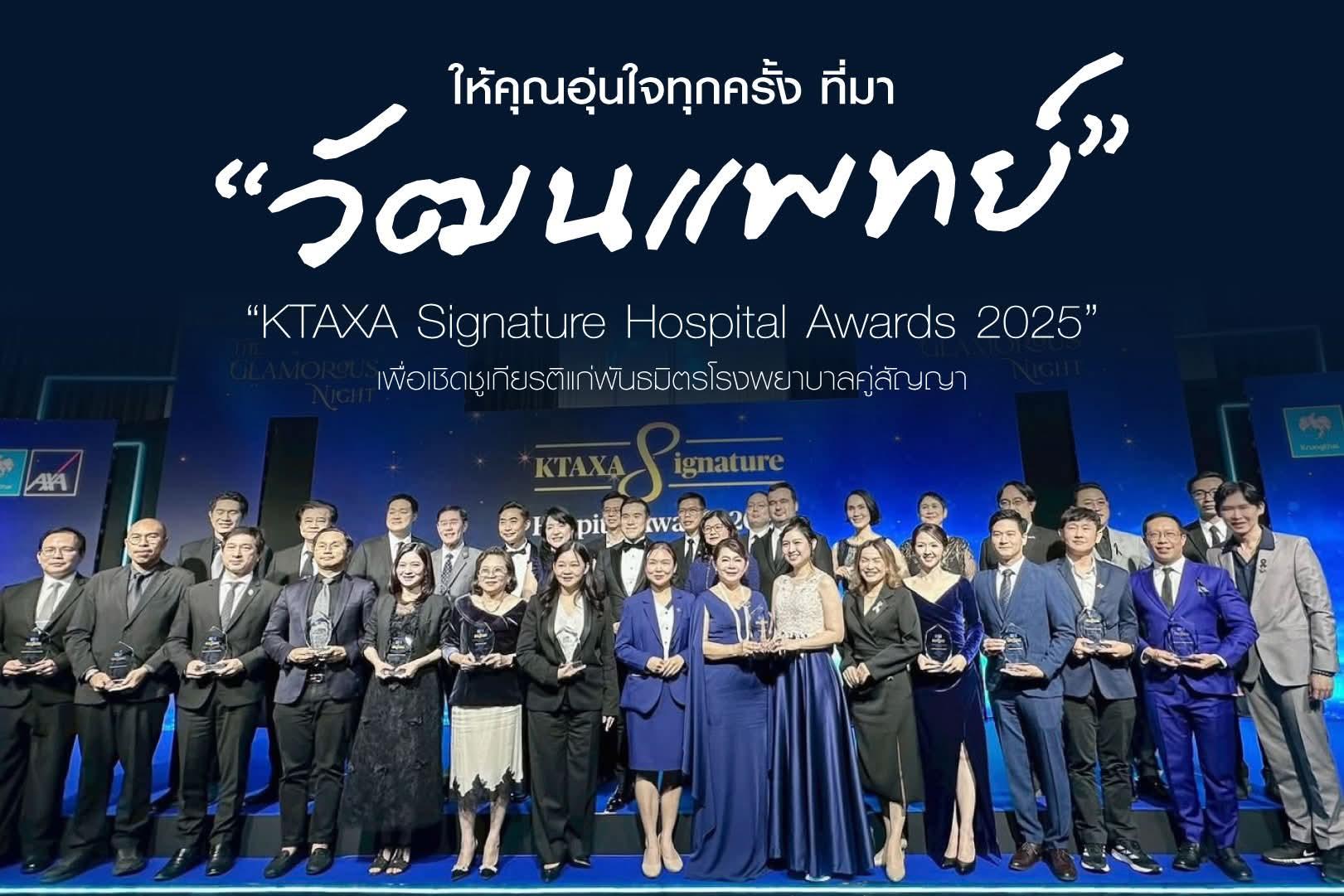
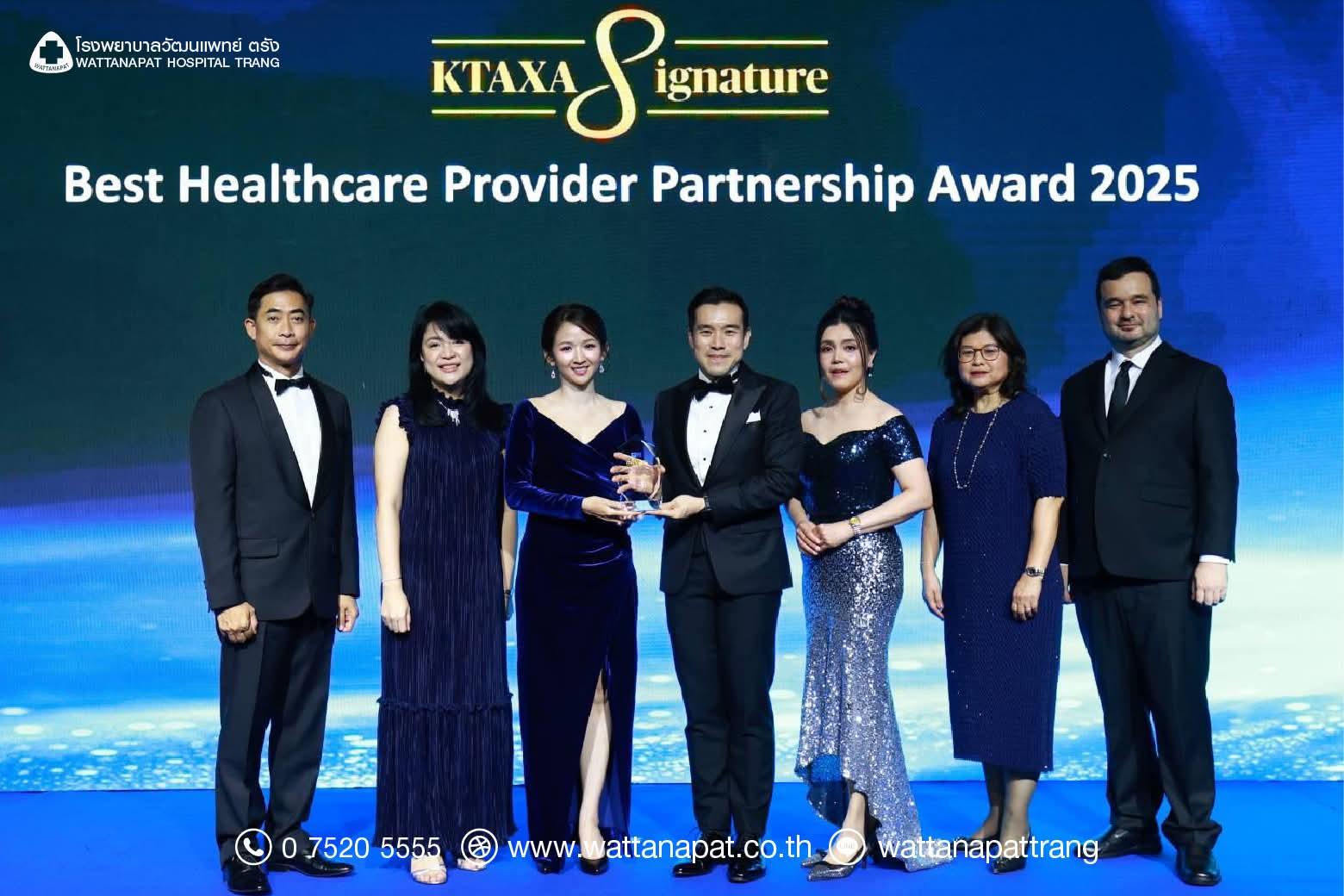
In addition, the team responsible for serving patients who use life insurance benefits achieved recognition by receiving an award from Krungthai-AXA Life Insurance Public Company Limited. "Best Healthcare Provider Partnership Award 2025"
Community & Social — Plan & Guidelines
Has a Community & Social Plan
Yes
Plan Description
The Company places importance on conducting its business sustainably across all dimensions. It has established policies to support social responsibility (Social), aiming to create positive impacts on communities and society as a whole, while promoting participation in improving the quality of life. The Company focuses on health promotion and enhancing health literacy among communities under the concept of “Wattanapat Volunteers: Always by Your Side.” Through Corporate Social Responsibility (CSR) initiatives, the Company contributes to and supports society, reinforcing its identity as a humanizing brand and growing sustainably alongside the Trang community. In addition, the Company undertakes Creating Shared Value (CSV) activities through various projects, as outlined below:
1. “Healthy Life Starts at Wattanapat” Project
The Company conducts community outreach programs to provide preliminary health assessments, including body composition analysis (InBody) and blood pressure measurement, enabling individuals to better understand their health status. A team of nurses provides personalized health advice and consultations tailored to individual needs. These activities are carried out across communities and workplaces, in collaboration with both public and private sectors, to improve accessibility to healthcare services. Participants are able to assess their basic health conditions and receive guidance to enhance their health knowledge from a multidisciplinary team.
In 2025, the Company organized a total of 14 such activities and provided health consultations to 1,167 participants. For more information: https://wattanapat.co.th/en/csr-1-68
2. Doctor-Led Health Education Program (“Doctor Talk: Stay Ahead of Your Health”)
The Company is committed to supporting community well-being by providing health education initiatives led by medical professionals. This program focuses on enhancing public knowledge of health care, disease prevention, and the promotion of healthy behaviors, which contribute to improving the overall quality of life within society. The program also aims to build awareness and understanding of key health issues, such as epidemic prevention and community-based healthcare practices. Educational sessions are delivered by specialist physicians and multidisciplinary teams, covering disease-specific topics and practical health management approaches. These activities are organized for the general public, corporate partners, patients, and their families, and are conducted through both on-site and online platforms. Doctor-led education helps improve public understanding of health and disease prevention, leading to better health outcomes, reducing the burden on the healthcare system, and promoting a higher quality of life in society.
In 2025, the Company organized a total of 23 educational sessions led by specialist physicians in key areas of expertise, including gastrointestinal diseases, pediatric infectious diseases, maternal health, liver and colorectal cancers, and osteoarthritis. A total of over 2,784 participants received health knowledge and guidance on disease prevention and self-care. For more information: https://wattanapat.co.th/en/csr-2-68
3. Community Care Program: “CPR SAVE LIFE”
The Company deploys expert teams to promote knowledge and skills in basic life support (BLS) and first aid through community outreach initiatives. Training sessions are conducted for the general public, including students in schools, to foster a learning society equipped with essential life-saving skills. The program aims to enhance the ability of individuals to assist themselves and others in emergency situations, thereby strengthening community resilience and safety.
In 2025, the Company organized a total of 34 training sessions on basic life support, benefiting 2,591 participants who gained essential skills to respond effectively in emergency situations. For more information: https://wattanapat.co.th/en/csr-3-68
4. Blood Donation Program: “Donate Blood, Save Lives”
The Company serves as a blood donation center in collaboration with the Trang Red Cross, supporting voluntary blood donations from the general public to help save lives. The initiative is carried out to facilitate access for donors within Trang Municipality and surrounding areas.
In 2025, the Company organized a total of 2 blood donation activities, collecting 113 units of blood, equivalent to 39,550 cc. For more information: https://wattanapat.co.th/en/csr-5-68
5. “Wattanapat Volunteers: Stand Together”
The Company actively supports provincial initiatives and community activities through its volunteer program. This includes deploying nursing teams and ambulances on standby to ensure the safety of participants during events, as well as providing assistance to improve the quality of life for those affected by flooding in Trang and southern Thailand.
The Company also supports public health campaigns that encourage healthy lifestyles, including participation in exercise and charity running events.
In 2025, the Company conducted a total of 11 activities under this program. For more information: https://wattanapat.co.th/en/csr-6-68
6. School Care Clinic Program
The Company operates the “School Care Clinic,” a child health initiative led by pediatric specialists, nurses, and multidisciplinary professionals. The program collaborates with schools to promote student health and reduce the risk of disease outbreaks within educational settings. Key activities include health education provided by pediatricians on common childhood illnesses, developmental guidance by occupational therapists, and support for school health rooms through the provision of basic medical supplies. The program also promotes access to influenza vaccination among students to help prevent outbreaks. This initiative has been continuously implemented since 2024.
In 2025, a total of 11 schools participated in the program, with 1,974 students gaining improved access to influenza vaccination, contributing to the reduction of influenza outbreaks among students. For more information: https://wattanapat.co.th/en/csr-4-68
7. WATTANAPAT CSR x SCG Thung Song
The Company, in collaboration with Siam Cement Group (Thung Song) Co., Ltd., operates a mobile medical unit to provide healthcare services to communities surrounding the cement plant in Thung Song. The initiative delivers accessible healthcare services through teams of physicians and nurses who provide medical examinations, treatment, and health advice to community members.
In 2025, the Company conducted a total of 9 outreach activities, providing medical services and health consultations to more than 1,549 individuals in the surrounding communities. For more information: https://wattanapat.co.th/en/crs-7-68
Plan Document Link
https://wattanapat.co.th/en/csr-project-2568
Plan Areas
| Plan Area |
|---|
| Occupational health, safety, health, and quality of life |
| Disadvantaged and vulnerable groups |
| Reducing inequality and promoting social equality |
Community & Social — Targets
Has Set Community & Social Targets
Yes
Targets
| Indicator | Target Areas | Base Year | Base Year — Description | Target Year | Target Year — Description |
|---|---|---|---|---|---|
| Number of people receiving healthcare services or referrals: 10,000 within the target year | 3041 · Description: Occupational health, safety, health, and quality of life | 2,024 | Number of people receiving healthcare services in 2024 = 3,872 people | 2,026 | Number of people served or provided with health services = 10,000 people |
| Create a learning society for community-based first aid and "safe life" community care reaching 10,000 people within the target year. | 3041 · Description: Occupational health, safety, health, and quality of life | 2,024 | Creating a learning society for community-based basic life support "safe life" Community care a total of 1,820 people | 2,026 | Creating a learning society for basic life support in the community. Community care "safe life" for 10,000 people |
Community & Social — Performance & Outcomes
Has Performance Results
Yes
Performance Description
The Company conducts its business with responsibility toward communities and society, placing strong emphasis on minimizing environmental impacts and avoiding operations that may negatively affect the quality of life of communities surrounding its facilities.
In 2025, there were no reported complaints from the community regarding social or environmental issues.
Performance and Outcomes in Community and Social Management
1. “Healthy Life Starts at Wattanapat” Project In 2025, the Company organized a total of 14 such activities and provided health consultations to 1,167 participants.
2. Doctor-Led Health Education Program (“Doctor Talk: Stay Ahead of Your Health”) In 2025, the Company organized a total of 23 educational sessions led by specialist physicians in key areas of expertise, including gastrointestinal diseases, pediatric infectious diseases, maternal health, liver and colorectal cancers, and osteoarthritis. A total of over 2,784 participants received health knowledge and guidance on disease prevention and self-care.
3. Community Care Program: “CPR SAVE LIFE” In 2025, the Company organized a total of 34 training sessions on basic life support, benefiting 2,591 participants who gained essential skills to respond effectively in emergency situations.
4. Blood Donation Program: “Donate Blood, Save Lives” In 2025, the Company organized a total of 2 blood donation activities, collecting 113 units of blood, equivalent to 39,550 cc.
5. “Wattanapat Volunteers: Always by Your Side” In 2025, the Company conducted a total of 11 activities under this program.
6. School Care Clinic Program In 2025, a total of 11 schools participated in the program, with 1,974 students gaining improved access to influenza vaccination, contributing to the reduction of influenza outbreaks among students.
7. WATTANAPAT CSR x SCG Thung Song In 2025, the Company conducted a total of 9 outreach activities, providing medical services and health consultations to more than 1,549 individuals in the surrounding communities.
The results of the above initiatives can be summarized as follows:
The Company places strong emphasis on sustainable business operations across all dimensions, with a clear policy to contribute positively to society (Social). The Company aims to create positive impacts on communities and society as a whole, while promoting participation in improving the quality of life.
In 2025, the Company continued to prioritize health promotion and the enhancement of health literacy across various communities under the concept of “Wattanapat Volunteer: Always by Your Side.” Through CSR initiatives that give back to society, the Company reinforces its identity as a Humanizing Brand, growing sustainably alongside the Trang community. In addition, the Company continues to implement Creating Shared Value (CSV) activities on an ongoing basis.
In 2025, a total of 3,951 people received healthcare services or health promotion support, representing a 2% increase compared to 2024. Over a two-year period, the cumulative number of beneficiaries reached 7,823, accounting for 78.2% of the target (10,000 people by 2026).
Furthermore, the Company has promoted a “Community Care: Safe Life” initiative to enhance basic life-saving knowledge within communities. In 2025, 2,951 people participated in this program, representing a 42% increase compared to 2024. Over a two-year period, the cumulative number of participants reached 4,411, accounting for 44.1% of the target (10,000 people by 2026).
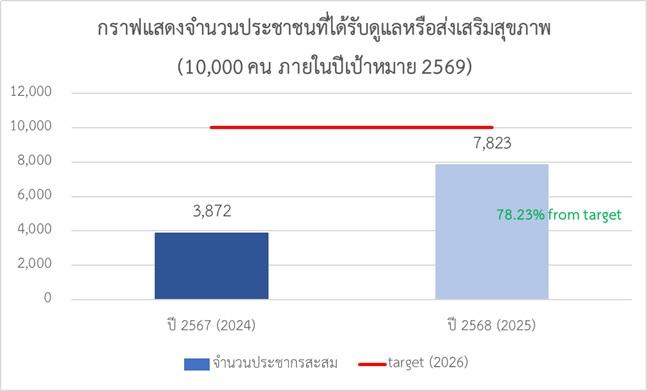
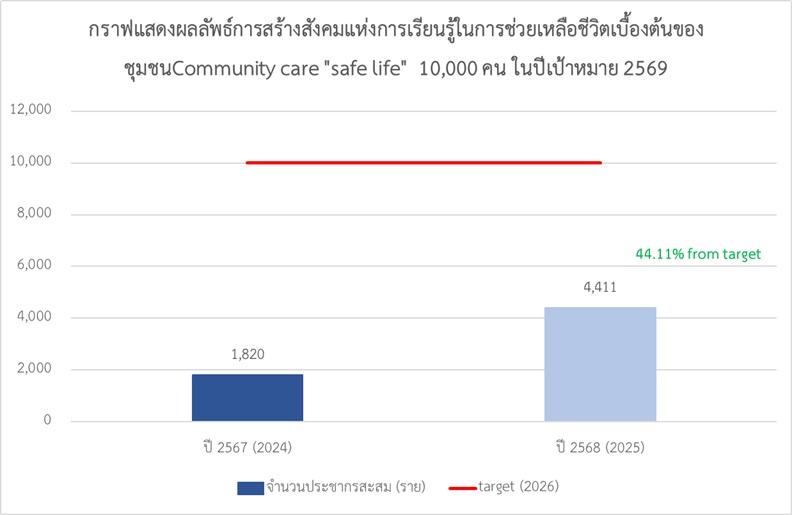
Other Social Management
Plan & Outcomes — Description
None
Law Violation Incidents
Law Violation Incidents
| Metric | Current Year | Previous Year | Two Years Ago |
|---|---|---|---|
| The total number of cases or incidents of significant violations of laws or regulations regarding social and human rights (Cases) | 0 | 0 | 0 |
| The total number of cases or incidents that cause significant labor disputes (Cases) | 0 | 0 | 0 |
| The total number of cases or complaints related to consumer rights violations (Cases) | 0 | 0 | 0 |
| The total number of cases or complaints related to partner rights violations (Cases) | 0 | 0 | 0 |
| The total number of cases or incidents that cause disputes with the community/society (Cases) | 0 | 0 | 0 |
| The total number of cases or incidents related to cyber security or customer data breaches (Cases) | 0 | 0 | 0 |
| The total number of cases or incidents related to safety and occupational health at work (Cases) | 0 | 0 | 0 |