

CG Policy · 2025
In this section7 topics
Corporate Governance Policy
Has a Corporate Governance Policy
Yes
Policy Description
The Company recognizes the importance of overseeing its operations to ensure alignment with its primary objectives and goals, in accordance with established strategies, policies, plans, and budgets. This includes appropriate monitoring, evaluation, and oversight of performance reporting, all conducted under ethical business practices, respecting the rights of and being responsible to shareholders and stakeholders, considering benefits to society, and managing environmental impacts. Furthermore, the Company continuously adapts to ongoing changes to maintain competitiveness and achieve strong long-term performance. Therefore, the Board of Directors has established a good corporate governance policy to guide the performance of duties by the Company's personnel and has reviewed this policy to encompass the principles and practices outlined in the Principles of Good Corporate Governance for Listed Companies 2017.
Policy Document Link
https://drive.google.com/file/d/1hPjKo0rjRghqrEHDBoZOT8eSsYF53cEI/view
Policy & Practices — Board of Directors
Has Policy & Guidelines for the Board
Yes
Board Guidelines
| Guideline | Other — Please Specify | Detail | Document Link | Page Number in Report |
|---|---|---|---|---|
| Nomination of Directors | Appointment of Directors and Executives The Board of Directors shall oversee the transparent and clear recruitment and selection of the Company's directors and Chief Executive Officer to ensure that the Chief Executive Officer and directors possess appropriate composition and qualifications consistent with the Company's business operations. The Board of Directors has appointed a Nomination, Remuneration, and Corporate Governance Committee to perform the duties of recruiting and selecting the Chief Executive Officer and directors of the Company. This committee will consider qualifications and select candidates according to the criteria established by the Nomination, Remuneration, and Corporate Governance Committee, without conflicting with relevant announcements of the Securities and Exchange Commission as prescribed by law. Other factors will also be considered, such as knowledge, abilities, business-related experience, and the benefit to the Company's business operations. The term of office for these positions is 3 years. 1. The shareholders' meeting shall appoint directors according to the following principles and methods: - Each shareholder shall have one vote per share. - In the election of directors, voting may be conducted by individual ballot, but in each resolution, shareholders must cast all available votes. Votes cannot be divided among any person or group. - The election of directors shall be decided by a majority vote. In the event of a tie, the chairman of the meeting shall cast the deciding vote. - The persons who receive the highest votes in descending order shall be elected as directors, up to the number of directors to be appointed or elected at that time. In the event that persons elected in the subsequent order receive an equal number of votes exceeding the number of directors to be appointed or elected at that time, the chairman shall cast the deciding vote. 2. At every annual general meeting, at least one-third of the directors shall retire by rotation. If the number of directors cannot be divided equally, the number of directors required to retire in the first and second years after the company's registration shall be determined by drawing lots. In subsequent years, the director who has been in office for the longest period shall retire. 3. A director who has retired by rotation may be re-elected to the position. 4. In the event that a director's position becomes vacant for reasons other than retirement by rotation, the Board of Directors may elect a person who possesses the qualifications and is not disqualified under the Public Limited Company Act and the Securities and Exchange Act to fill the vacancy at the next Board of Directors meeting, unless the remaining term of the director is less than two months. The person appointed to fill the vacancy shall hold office only for the remaining term of the director they replace, and such resolution of the Board of Directors must be approved by no less than three-fourths of the remaining directors. 5. In the event that the entire Board of Directors vacates their positions, the outgoing Board shall remain in an acting capacity to continue the Company's operations only as necessary until the new Board assumes office, unless otherwise ordered by the court. In cases where the Board vacates positions by court order, the outgoing Board must arrange a shareholders' meeting to elect a new Board within one month from the date of vacating office, by sending a notice of the shareholders' meeting no less than fourteen days before the meeting date and publishing the notice of the meeting in a newspaper no less than three days before the meeting, with the publication occurring for three consecutive days. 6. The shareholders' meeting may resolve to remove any director from office before the expiration of their term by a vote of no less than three-fourths of the shareholders present and entitled to vote, and holding shares totaling no less than one-half of the shares held by the shareholders present and entitled to vote. Appointment of Independent Directors Regarding the appointment of independent directors, whenever an independent director completes their term or there is a need to appoint additional independent directors, the Company, through its current Board of Directors, will consult together to identify suitable individuals with appropriate experience, knowledge, and abilities that would benefit the Company, as well as possessing the minimum qualifications listed below. These individuals will then be proposed to the Board of Directors meeting and/or the shareholders' meeting for consideration in accordance with the Company's Articles of Association. The Company has a policy to appoint independent directors comprising no less than one-third of the total number of directors and to have at least 3 independent directors. The Company has established the qualifications for independent directors in accordance with the requirements of the Capital Market Supervisory Board. Independent directors shall verify and certify their independence qualifications at least once a year, and this will be reported along with the director's profile information at year-end for the preparation of the annual registration statement and the Company's annual report. Appointment of Audit Committee Members The Audit Committee is appointed from the Board of Directors or shareholders, and all members must be independent directors who possess independence qualifications as prescribed by the Capital Market Supervisory Board and in accordance with the Company's corporate governance principles. The Audit Committee shall consist of at least 3 independent directors, and at least 1 audit committee member must have knowledge in accounting and/or finance, to perform duties of auditing and overseeing the Company's operations, including overseeing financial reports, internal control systems, the selection of auditors, and the consideration of conflicts of interest. The term of office is 3 years or ends upon the cessation of their directorship in the Company. However, if a director retires by rotation but is re-appointed for another term by the shareholders' meeting, their term as an audit committee member shall be considered continuous until the completion of the aforementioned 3-year term. The Chairman of the Audit Committee and audit committee members whose terms have expired may be re-appointed as deemed appropriate by the Board of Directors. | https://drive.google.com/file/d/1hPjKo0rjRghqrEHDBoZOT8eSsYF53cEI/view | 5-7 | |
| Determination of Director Remuneration | The company clearly and transparently defines its director compensation policy, where compensation is at a level appropriate for the duties and responsibilities of each director, sufficient to retain knowledgeable and capable directors, as well as creating incentives for high-quality and good standard performance, appropriate for the assigned duties and responsibilities. This compensation will be considered and screened by the Nomination, Remuneration, and Corporate Governance Committee before being presented to the Board of Directors and then submitted to the Annual General Meeting of Shareholders for approval. The determination of compensation for senior executives will be considered in conjunction with the company's performance and the performance of each senior executive. The Nomination, Remuneration, and Corporate Governance Committee will consider the criteria for evaluating the performance of the Chief Executive Officer annually, by using evaluation criteria linked to the strategic plan and annual work plan according to the set goals, to determine appropriate compensation and incentive measures, and the Chief Executive Officer is The company requires the disclosure of compensation to be paid to directors and executives in the format prescribed by the Securities and Exchange Commission, board meetings, and self-assessment. | https://drive.google.com/file/d/1hPjKo0rjRghqrEHDBoZOT8eSsYF53cEI/view | 8 | |
| Independence of the Board of Directors from the Management | The Company has clearly delineated the roles and responsibilities between the Board of Directors and the management. The Board of Directors is responsible for establishing policies and overseeing the management's operations at the policy level, while the management is tasked with administering the Company's affairs in various aspects in accordance with the stipulated policies. Consequently, the Chairman of the Board and the Chief Executive Officer are distinct individuals. Both positions require appointment by the Board of Directors to ensure the selection of the most appropriate candidates. | https://drive.google.com/file/d/1hPjKo0rjRghqrEHDBoZOT8eSsYF53cEI/view | 4 | |
| Director Development | The Company has a policy to promote training and knowledge sharing for directors involved in the Company's corporate governance system, which comprises directors, audit committee members, executive directors, nomination, remuneration, and corporate governance committee members, risk management committee members, and the company secretary, as well as the Company's executives, to ensure continuous development in their performance. Should there be any change in directors, the Company will arrange for an introduction to the Company's business operations and provide useful information for the new directors to perform their duties, to promote continuous efficient performance under the framework of good corporate governance. Furthermore, all members of the Board of Directors have completed 100% of the training courses organized for directors. Details of their training completion are provided in Attachment 1, under the heading "Directors' Profiles." | https://drive.google.com/file/d/1hPjKo0rjRghqrEHDBoZOT8eSsYF53cEI/view | 7-8 | |
| Board Performance Evaluation | The company mandates the performance evaluation of the Board of Directors and sub-committees, both as a collective and individually, to be conducted annually. The evaluation results will be used to improve the effectiveness of the Board's performance and for the development of the company's directors. The Company Secretary is responsible for preparing the evaluation forms, presenting them to the Chief Executive Officer and the Board for consideration, and distributing the self-assessment forms (both collective and individual) for the Board of Directors and sub-committees to use in their self-assessment and as a framework for reviewing their duties on various issues over the past year. These evaluation forms adhere to the guidelines of the Stock Exchange of Thailand. After receiving the completed evaluation forms from the directors, the Company Secretary will summarize the scores to be presented to the Board of Directors for acknowledgment. Individual director self-assessment, assessed in 3 aspects as follows: 1. Board structure and qualifications 2. Effectiveness of Board meetings 3. Roles, duties, and responsibilities of the Board of Directors Board self-assessment, assessed in 5 aspects as follows: 1. Board structure and qualifications 2. Board meetings 3. Roles, duties, and responsibilities of the Board of Directors 4. Relationship between the Board of Directors and Management 5. Director self-development and executive development | https://drive.google.com/file/d/1hPjKo0rjRghqrEHDBoZOT8eSsYF53cEI/view | 8 | |
| Corporate Governance of Subsidiaries and Associated Companies | The company will invest in companies whose business objectives are similar to the company's core business, or in businesses with similar characteristics, or in businesses that support the company's operations, which will lead to increased performance or profits for the company, or invest in businesses that provide synergy to the company by further supporting the company's core business operations to be more comprehensive, to enhance the company's competitive capabilities. However, the Board of Directors may consider investing in other businesses beyond the company's core business or other existing businesses if the Board of Directors deems such businesses to have potential and such investments to be beneficial to the company and its shareholders as a whole. In overseeing subsidiaries and joint ventures, the Board of Directors will consider appointing directors or executives with qualifications and experience suitable for business operations to represent the management of those subsidiaries and joint ventures, in order to establish key policies and control the business operations of the said subsidiaries and/or joint ventures. In this regard, directors or executives representing the company must oversee the subsidiaries and/or joint ventures to manage or operate various activities according to the policies set by the company, and must exercise discretion in accordance with the resolutions of the Board of Directors' meetings and/or the company's shareholders' meetings that approve significant matters of the subsidiaries and/or joint ventures, to generate maximum benefit for the company and for its sustainable growth. In addition, directors or executives representing the company must oversee that the subsidiary discloses information regarding transactions between the said subsidiary and its related parties, the acquisition and disposal of assets, or any other significant transactions of the said subsidiary accurately and completely, and applies the criteria related to the aforementioned disclosure of information and transactions in the same manner as the company's criteria, including overseeing that the subsidiary prepares financial statements that are complete, accurate, verifiable, and completed within the specified timeframe. The company has a policy to arrange for independent auditors to audit the operations of its subsidiaries to prevent errors and to ensure operations are conducted transparently as necessary and appropriate, with periodic audits and reports submitted to the Audit Committee for consideration. | https://drive.google.com/file/d/1hPjKo0rjRghqrEHDBoZOT8eSsYF53cEI/view | 4-5 | |
| Other guidelines regarding the board of directors | Board and Sub-committee Structure | The Board of Directors comprises individuals with diverse backgrounds in terms of age and gender. The Company's policy is for the Board to include at least 30% female directors, possessing knowledge, skills, and experience beneficial to the Company in formulating its policies. The Company has structured its Board of Directors to be appropriate for its business and size, and in compliance with legal requirements. The composition of the Board of Directors will have an appropriate number and a suitable proportion of executive directors, non-executive directors, and independent directors to reflect a proper balance of power. Furthermore, the Board of Directors has appointed various sub-committees to assist in the corporate governance of the Company. The Board of Directors' structure comprises executive directors and a greater number of non-executive directors. The non-executive directors include 4 independent directors. There is an Audit Committee, consisting of 3 independent directors, which acts as a representative of the shareholders in overseeing the Company's operations to ensure accuracy and transparency. There is also a Nomination, Remuneration, and Corporate Governance Committee, comprising more than half independent directors, with the Chairman of this committee being an independent director. This committee is responsible for overseeing corporate governance, the nomination and selection process, and determining the remuneration of directors and senior executives of the Company, for submission to the Board of Directors and/or shareholders' meeting for approval. Furthermore, there is a Risk Management Committee, tasked with considering potential problems or risk factors that may arise in the Company's business operations and finding ways to mitigate or manage these risks to the lowest possible level. According to the Company's Articles of Association, at the Annual General Meeting, one-third of the directors must retire from office. If the number of directors cannot be divided into three parts, the number closest to one-third shall retire. For the first and second years after the Company's registration, the directors to retire shall be determined by drawing lots. In subsequent years, the director who has been in office for the longest period shall retire. However, a director retiring by rotation may be re-elected to office. To ensure that directors can dedicate sufficient time to their duties at the Company, the Company stipulates that each director may hold directorships in a maximum of 5 other listed companies and must attend at least 75% of all Board meetings held in that year. The Company schedules Board meetings at least once every three months. Each meeting has a clearly defined agenda, and meeting notices with details are sent out at least 5 business days in advance to allow the Board of Directors sufficient time to review the information before attending. Meeting minutes are recorded in writing and stored after approval by the Board of Directors, making them available for inspection by the Board and relevant parties. In addition, the Company has a policy to appoint one independent director to serve as the Chairman of the Board, and independent directors shall hold directorships in the Company for a continuous period not exceeding 9 years from the date of their initial appointment as independent directors. Should there be a need to re-appoint such independent directors, the Board of Directors shall reasonably consider the necessity thereof. The Company has established a clear and transparent remuneration policy, ensuring that remuneration is appropriate for the duties and responsibilities assigned to each director, and is sufficient to attract and retain qualified directors and executives as required by the Company. The payment of directors' remuneration must be approved by the Company's shareholders' meeting. Additionally, the Board of Directors has appointed an Audit Committee consisting of 3 members to support the Board in overseeing and reviewing management, internal controls, and compliance with relevant laws, as well as preparing financial reports, to ensure that the Company's operations and disclosure of information are transparent and reliable. The Company has a Company Secretary who is responsible for providing advice on various regulations that the Board of Directors must be aware of, overseeing the activities of the Board of Directors, and coordinating the implementation of Board resolutions. | https://drive.google.com/file/d/1hPjKo0rjRghqrEHDBoZOT8eSsYF53cEI/view | 2-4 |
| Other guidelines regarding the board of directors | Appropriate Risk Management and Internal Control | The Company places importance on internal control systems at both management and operational levels. To ensure operational efficiency, the Company has clearly defined the duties and operational authorities of employees and management in writing. There is oversight to ensure the beneficial use of company assets, and the duties of operational personnel, monitoring and control personnel, and evaluation personnel are segregated. Internal Control Aspect The Board of Directors has appointed an Audit Committee, comprising no less than 3 independent directors who meet the qualifications prescribed by the Capital Market Supervisory Board and the Stock Exchange of Thailand. At least one of these directors must possess knowledge, understanding, or experience in accounting or finance, and have continuous knowledge regarding the causes of changes in financial reports. Their duties include reviewing the internal control and internal audit systems for suitability and effectiveness, ensuring the company's compliance with relevant laws and standards, and considering the qualifications and appointment of independent internal auditors to monitor and inspect the internal control system. They also consider the selection of the company's external auditors, review connected transactions or transactions that may involve conflicts of interest, and report the audit results to the Audit Committee to ensure that the company's key operations are conducted in accordance with the guidelines and criteria set by the Stock Exchange of Thailand and/or the Securities and Exchange Commission, and that these are disclosed in the financial statements, annual registration statement/annual report (Form 56-1 One Report). The Company has already stipulated in writing the details regarding the composition of the Audit Committee, qualifications of audit committee members, term of office, and the powers, duties, and responsibilities of the Audit Committee. Risk Management Aspect The Board of Directors has established an enterprise-wide risk management policy and oversees the implementation of systems or processes for risk management, including appropriate mitigation measures and control methods to reduce impacts on the company's business. Furthermore, the Board of Directors has appointed a Risk Management Committee to consider potential problems or risk factors that may arise in the company's business operations and to find ways to minimize or manage these risks. This committee is responsible for developing a risk management policy consistent with the company's objectives, main goals, and strategies, to serve as a framework for ensuring consistent risk management across the organization. It also ensures regular policy reviews and oversees the identification, prioritization, impact and opportunity assessment, and appropriate risk treatment strategies. The Risk Management Committee is tasked with vetting these matters before submitting them to the Board of Directors for regular consideration. Conflict of Interest The Company has established a policy regarding potential conflicts of interest that may arise between the Company and its management, Board of Directors, or shareholders, based on the principle that any decision made in conducting business activities must be solely for the best interests of the Company. Actions that could lead to conflicts of interest should be avoided. Individuals involved in or related to the matter under consideration are required to inform the Company of their relationship or involvement in such matters and must not participate in the decision-making process, nor do they have the authority to approve such transactions. The Board of Directors has established policies to guide appropriate risk management and internal control, as follows: 1. Business Code of Conduct 2. Conflict of Interest Prevention Policy 3. Risk Management Policy 4. Dividend Payment Policy 5. Policy on Connected Transactions 6. Policy on Supervision of Inside Information Usage 7. Anti-Corruption Policy 8. Succession Plan Policy 9. Criteria and Qualifications for Employee Promotion (Career path) Anti-Corruption and Whistleblowing Aspect The Company has established an anti-corruption policy, which aligns with the guidelines of the "Thai Private Sector Collective Action Against Corruption" project. The Company is committed to building and maintaining an organizational culture that firmly believes corruption is unacceptable, both in transactions with government and private sectors. Furthermore, principles of conduct have been established for the directors, executives, employees of the Company, and its subsidiaries. The Company provides channels for complaints and whistleblowing in cases where acts of corruption or suspected corruption affecting the Company are observed. Complaints or tips can be reported to the Chairman of the Board, the Chairman of the Audit Committee, or the Chief Executive Officer. All complaint and tip information submitted to the Company will be kept confidential. The Chairman of the Board, the Chairman of the Audit Committee, or the Chief Executive Officer will order an investigation of the information and seek solutions (if any), and subsequently report to the Board of Directors. | https://drive.google.com/file/d/1hPjKo0rjRghqrEHDBoZOT8eSsYF53cEI/view | 10-12 |
| Other guidelines regarding the board of directors | Maintaining Financial Credibility and Information Disclosure | 1. The Board of Directors places importance on the disclosure of accurate, complete, sufficient, transparent, and timely information, including financial and general information, as well as other information that has or may have an impact on the Company's securities prices, all of which affect the decision-making process of investors and the Company's stakeholders. The Company will disclose such information in accordance with the regulations of the Securities and Exchange Commission, the Capital Market Supervisory Board, and the Stock Exchange of Thailand. The Company will disseminate its information to shareholders, investors, and the public through various channels as follows: • Dissemination of information through the websites of the Securities and Exchange Commission and the Stock Exchange of Thailand • Financial information via the website www.setsmart.com • Annual Registration Statement/Annual Report (Form 56-1 One Report) • Information via the Company's website http://www.wattanapat.co.th/ Furthermore, various information that the Company has disclosed to the public and stakeholders will also be published on the Company's website, with regular updates, to enable users to receive timely information, access it conveniently, and gain maximum benefit. 2. The Company has established an Investor Relations department to communicate with investors or shareholders. The Company will regularly hold meetings to analyze operational results and will disseminate Company information, financial information, and general Company information to shareholders, securities analysts, credit rating agencies, and relevant government agencies through various channels, namely reporting to the Securities and Exchange Commission, the Stock Exchange of Thailand, and the Company's website. Furthermore, the Company emphasizes consistent information disclosure to ensure shareholders regularly receive news via the Company's website, where information is always updated. Such information includes the vision, mission, financial statements, press releases, annual reports, company and executive structure, as well as shareholding structure and major shareholders, meeting invitations, company registration documents, charters, etc. The Company places importance on its financial statements and financial information presented in the annual report. The Audit Committee will review the quality of financial reports and internal control systems, including the adequate disclosure of significant information in the notes to the financial statements, and report to the Board of Directors. A report on the Board of Directors' responsibility for financial reporting will be presented alongside the auditor's report in the annual report. 3. The Company will disclose information about each director, the roles and responsibilities of the Board of Directors, the number of meetings, and attendance at meetings in the past year in the annual report and the Company's annual registration statement. 4. The Company will disclose audit fees and other services provided by the auditor. 5. The Company has established measures to prevent the misuse of inside information (insider trading) by related persons, which include directors, executives, and employees in departments involved with inside information (including their spouses and minor children). Related persons are prohibited from trading the Company's securities for at least 1 month before the disclosure of quarterly and annual financial statements, and are prohibited from trading securities or futures contracts related to the listed company's securities until 24 hours have passed since such information was publicly disclosed, and are also prohibited from disclosing such information to other persons. | https://drive.google.com/file/d/1hPjKo0rjRghqrEHDBoZOT8eSsYF53cEI/view | 13-14 |
Code of Conduct
Has a Business Code of Conduct
Yes
Code of Conduct Description
The company is mindful of equality, integrity, ethics, and upholding the code of conduct in business operations with its stakeholders. This business code of conduct must be sufficiently clear to prevent misconduct or damage to reputation and reflect the organization's requirement for everyone to comply with laws and regulations, in accordance with policies and the organization's core values. All employees are required to adhere to and strictly follow the policies, as well as comply with the law, including the agreed-upon framework with partners and stakeholders are required to be offered the best options and treated equally, transparently, and fairly to foster good relationships and promote sustainable development together with partners, leading to becoming a good governance organization.
Code of Conduct Link
https://drive.google.com/file/d/1SLfs62lixktUJn1WE9P2iECg0xTrcT-6/view
Code of Conduct Practices
| Guideline | Detail | Document Link | Page Number in Report |
|---|---|---|---|
| Prevention of Misuse of Inside Information | 1. The company requires all employees to avoid conflicts between their personal interests and the company's interests when dealing with business partners and other individuals, and to avoid engaging in related party transactions that may create a conflict of interest with the company. 2. In cases where such a transaction is necessary for the benefit of the company, it shall be conducted as if it were a transaction with an external party, with commercial terms similar to those that a reasonable person would enter into with a general counterparty, and with commercial bargaining power free from the influence of being a director. 3. In the event that an executive director or employee serves as a director, partner, or advisor in another organization, such position must not conflict with the Company’s interests or the performance of their direct duties. Furthermore, prior approval from the Company must be obtained. 4. When considering transactions that have or may have conflicts of interest between shareholders, directors, executives, and other potentially conflicting parties, clear guidelines shall be applied to ensure that such transactions are fair, transparent, reasonable, and that information is disclosed accurately and completely. A report form for disclosing transactions suspected of conflicting with the company's interests shall also be provided in the corporate governance manual. 5. Related persons, as defined by the criteria of the Stock Exchange of Thailand, who have a direct or indirect interest in the company's business operations, must report such interests immediately upon the occurrence of a transaction. To ensure regular monitoring by the company, the Company Secretary is assigned the duty to survey related party transactions at the end of each year and report to the Chairman of the Audit Committee at least once a year. 6. It is hereby announced that directors, executives, and employees who possess significant inside information that may affect the trading price of securities must refrain from trading the company's securities during the 1-month period prior to the company's announcement of operating results or prior to the disclosure of such inside information to the public. Furthermore, they are prohibited from trading securities or derivatives related to the listed company's securities until 24 hours have passed since such information was publicly disclosed, and they are also prohibited from disclosing such information to other persons. 7. For the benefit of monitoring the interests of directors and executives of the company or related persons who have an interest in the management of the company and its subsidiaries, in accordance with the Securities and Exchange Act, the Board of Directors has stipulated that information on related party transactions must be reported quarterly and in accordance with the prescribed criteria. 8. In cases where related persons participate in or hold shares in businesses that compete with the company's business, which may create a conflict of interest with the company, the following actions shall be taken: • Directors, executives, and related persons must inform the Board of Directors in writing. • Employees must inform the Managing Director in writing. 9. The act of an employee disclosing confidential company information to other persons, whether during their employment with the company or after leaving the company, without proper authorization from the company, is considered a conflict of interest. | https://drive.google.com/file/d/1SLfs62lixktUJn1WE9P2iECg0xTrcT-6/view | 7-9 |
| Anti-corruption | The Company recognizes that corruption impacts and hinders the social and economic development of the country. Unethical business practices create business unfairness, damage the Company's reputation, competitive ability, and can lead to the Company being unacceptable both domestically and internationally. It also erodes the confidence of shareholders, investors, or individuals involved in seeking direct or indirect benefits through the misuse of authority. With a clear approach to cooperate and support both government and private sectors, the Company has established an anti-corruption policy, adopting official guidelines, including those of the "Thai Private Sector Collective Action Against Corruption (CAC) Project." The Company is committed to building and maintaining an organizational culture that upholds that corruption is unacceptable in all transactions with both public and private sectors. Furthermore, the following principles have been established for directors, executives, employees of the Company, and its subsidiaries to adhere to: 1. Directors, executives, and employees of the Company must not solicit, engage in, or accept any form of corruption, whether directly or indirectly, for the benefit of the Company, themselves, their families, friends, or acquaintances. This policy covers subsidiaries, associated companies, other companies over which the Company has control, and all relevant departments of the Company. Compliance with this anti-corruption policy shall be regularly reviewed, and operational guidelines and requirements shall be revised to align with changes in business, regulations, and legal provisions. Any violation or act that supports, assists, or cooperates with corruption will be subject to disciplinary action in accordance with company regulations and may face legal penalties if such act is unlawful. 2. Directors, executives, and employees at all levels must not neglect or ignore any acts that constitute corruption involving the Company. They must report such acts to their supervisors or responsible persons and cooperate in verifying facts, as well as establish channels for receiving complaints from external parties as specified by the Company. 3. The Company must provide fairness and protection to employees who refuse corruption or report corruption related to the Company. The Company will not demote, punish, or impose negative consequences on employees who refuse corruption, even if such refusal results in the Company losing business opportunities. 4. Directors and executives at all levels of the Company must demonstrate integrity and serve as good role models in adhering to the anti-corruption policy. The Anti-Corruption Working Group and the Human Resources Development Department are responsible for training, disseminating knowledge, building understanding, and promoting strict and continuous adherence to the anti-corruption policy among directors, executives, and employees at all levels, and for fostering it as part of the organizational culture. 5. This anti-corruption policy covers human resource management processes, from recruitment or selection of personnel, promotion, training, to performance evaluation of employees. Supervisors at all levels are required to communicate and ensure employees understand and apply this policy in business activities under their responsibility, and to oversee its effective implementation. The Company does not employ government officials at the executive and board levels. 6. Any actions taken in accordance with the anti-corruption policy shall follow the guidelines stipulated in the "Anti-Corruption Policy," "Anti-Corruption Handbook," "Ethics Handbook," and "Good Corporate Governance Policy," as well as relevant company regulations and operational manuals, and any other guidelines that the Company may establish in the future. 7. The Company mandates the dissemination of its anti-corruption policy through internal and external media such as the Intranet, the Company's Website, and annual reports. This policy is implemented in accordance with Thai anti-corruption laws. | https://drive.google.com/file/d/1UJ0sRrXET6f8kCOPch0t2_c3iaz3yVbW/view | |
| Whistleblowing and Protection of Whistleblowers | The company provides opportunities for employees and stakeholders to submit complaints, express opinions, and report illegal acts or corruption, by defining the types of reports, responsible parties, and reporting channels as follows: 1. Send an anonymous letter by mail to the person assigned to receive reports at the address: "Wattanapat Hospital Trang Public Company Limited, No. 247/2 Phatthalung Road, Thap Thiang Subdistrict, Mueang District, Trang Province." 2. Central telephone number 075-205555, extension to the person assigned to receive reports. 3. Electronic mail (e-mail) - Chairman of the Board E-mail : dhajjai.su@wattanapat.co.th Or - Chairman of the Audit Committee E-mail : wichit.ch@wattanapat.co.th Or - Chief Executive Officer E-mail : somchai.ch@wattanapat.co.th 4. Via website : www.wattanapat.co.th The process for handling complaints upon receipt is as follows: 1) Fact-finding: The complaint recipient will proceed to gather facts related to the violation or non-compliance with the code of conduct personally or assign a suitable person to do so. 2) Process and filter information: The complaint recipient will process and filter information to consider appropriate steps and management methods for each matter, which may include: • Act personally or assign others to act on their behalf if they deem it within their authority to do so, or • Report to authorized and relevant individuals to process and filter information. 3) Determine operational measures: The person acting according to item 2) shall determine operational measures to cease the violation or non-compliance with the code of conduct and mitigate damage to affected parties, considering the overall distress and damage. This includes establishing measures to prevent recurrence. In important cases, the complaint recipient will report the results to the Audit Committee and/or the Board of Directors, such as matters affecting the company's reputation, image, or financial status, or conflicting with the company's business policies, or involving senior management, etc. 4) Report results: The complaint recipient is responsible for reporting the results according to item 3) to the complainant if the complainant has disclosed their identity. Measures for protection and mitigation of damage for reporters, complainants, or those cooperating in reporting violations or non-compliance with the code of conduct. The company has established protective measures for complainants according to the following criteria: 1. Complainants may choose not to disclose their identity if they believe such disclosure would be unsafe. However, if they disclose their identity, the organization will be able to report progress and clarify facts. 2. The complaint recipient will keep relevant information confidential/consider safety, having established protective measures for employees who report and/or provide information and/or cooperate in data verification. They will be protected from unfair treatment such as changes in job position, job nature, workplace, suspension, intimidation, interference with work, or termination of employment due to the act of reporting a complaint. 3. Relevant information is considered confidential and will be disclosed only as necessary, taking into account the safety and potential harm to the reporter, the source of information, or involved parties. 4. In cases where the complainant believes they may be unsafe or may suffer distress or damage, the complainant may request the company to establish appropriate protective measures. Alternatively, the company may establish protective measures without the complainant's request if it deems the matter likely to cause distress, damage, or unsafety. | https://drive.google.com/file/d/1SLfs62lixktUJn1WE9P2iECg0xTrcT-6/view | 21-24 |
| Preventing the Misuse of Inside Information | The Company places importance on preventing the use of its inside information. The Company has a policy prohibiting its directors, executives, and employees from disclosing, whether directly or indirectly, using, or exploiting for their own benefit or the benefit of others, by any means, any information not yet generally disclosed to the public that is material to changes in the price or value of the Company's securities ("Inside Information"), or any information affecting the Company's business operations that could cause damage or disadvantage to the Company, including but not limited to performance data, trade secrets, or any other information of the Company not yet generally disclosed to the public ("Business Secrets"), which could lead to an advantage over others, regardless of whether remuneration is received. Furthermore, they must not buy or sell securities or enter into derivative contracts related to the Company's securities using inside information. Therefore, the Company has established the following guidelines for preventing the use of inside information: 1. Reporting Changes in Securities Holdings (1) Persons with a duty to report securities holdings, directors, executives, and auditors, including their spouses or cohabiting partners, minor children, and legal entities in which such persons collectively hold more than 30 percent of the total voting rights of such legal entity (collectively referred to as "Related Persons"). (2) The Company shall provide knowledge to directors, executives, and auditors regarding their duty to report changes in the Company's securities holdings and derivative contracts referencing the price or securities of the Company. (3) Directors, executives, and auditors have a duty to report changes in their own securities holdings and derivative contracts referencing the price or securities of the Company, and those of Related Persons, to the Office of the Securities and Exchange Commission ("SEC Office") in accordance with the notification issued under Section 59 of the Securities and Exchange Act B.E. 2535 (including its amendments) ("SEC Act") ("Report on Changes in Securities Holdings") within 3 (three) business days from the date of purchase, sale, transfer, or acceptance of transfer of securities or derivative contracts. However, in cases where directors and executives are not yet listed in the SEC Office's director and executive roster system, such directors or executives shall report within 7 (seven) business days from the date of purchase, sale, transfer, or acceptance of transfer of securities or derivative contracts. This shall be in accordance with the relevant or amended notifications. (4) Directors and executives of the Company have a duty to submit a copy of the Report on Changes in Securities Holdings to the Company Secretary on the same day that such report is submitted to the SEC Office. 2. Prohibition on the Use of Inside Information (1) Directors, executives, and employees of the Company and its subsidiaries (if any) who have knowledge of or possess the Company's inside information must refrain from buying or selling the Company's securities, or entering into derivative contracts referencing the price or securities of the Company, or using such inside information for their own benefit or the benefit of others, by any means, before such inside information is disclosed to the public, unless it is in accordance with Section 242 of the Securities and Exchange Act B.E. 2535 (and its amendments) ("SEC Act"). Furthermore, such persons are prohibited from disclosing inside information to others until such information has been publicly announced. (2) Persons who know or possess inside information concerning the Company are prohibited from buying or selling the Company's securities, or entering into derivative contracts referencing the price or securities of the Company, for at least 1 month before the financial statements or other information affecting the Company's securities price are disclosed to the public, and during the 24-hour period after such financial statements or information of the Company have been disclosed to the public (Black Out Period). (3) Directors, executives, and employees of the Company are prohibited from using the Company's inside information or business secrets, as well as the business secrets of business partners that they have come to know in such position or capacity, for the purpose of buying or selling, or offering to buy or sell, or soliciting any person to buy or sell, or offer to buy or sell, the Company's securities, and from entering into derivative contracts referencing the price or securities of the Company, whether directly or indirectly, regardless of whether such use of information causes damage to the Company and its business partners, and regardless of whether such action is for their own benefit or the benefit of any other person. This also includes not disclosing such information or seeking to benefit from it by inducing any person to act or refrain from acting in any way to obtain benefits for themselves or any other person, regardless of whether they receive remuneration. 3. Preservation of Inside Information (1) Directors, executives, and employees of the Company who know or possess the Company's inside information must preserve such inside information with care and security to prevent it from leaking externally. (2) Directors, executives, and employees of the Company must not disclose the Company's or its subsidiaries' (if any) inside information to other persons who are not involved with such inside information, to prevent the inside information from being used for their own benefit or the benefit of others. (3) The Company must establish a system for preserving and preventing the use of inside information to ensure that inside information does not leak and is not used for the benefit of buying or selling securities, whether for oneself or for others. (4) The Company shall arrange for a confidentiality agreement with consultants or other service providers before allowing such persons access to transactions involving inside information. | https://drive.google.com/file/d/1NGKXxzXK--vZaZ7yPSA0BH5E-gy9BLVP/view?usp=drive_link | |
| Giving or receiving gifts, entertainment, or business entertainment | The giving or receiving of gifts, assets, entertainment, or any benefits from customers, business partners, stakeholders, or parties related to the company must comply with the company's "Ethics Handbook" by: 1. Executives and employees are prohibited from receiving or soliciting gifts, such as entertainment, services, financial support, or monetary rewards from individuals doing business with the company, except for: 1.1) It is a customary gift with a value not exceeding 3,000 Baht, such as receiving money from a doctor as a New Year's gift for all personnel. 1.2) It is a general sales promotion by business partners. In all cases of receiving money or items, it must be reported to one's supervisor immediately. The receipt of such items must not unfairly influence any decision in the performance of duties. A report form for receiving gifts, assets, or other benefits, or a report form for receiving financial support, must be completed. The money, gifts, or items must then be submitted to the Human Resources Department for further action according to the company's Anti-Corruption Handbook. 2. Regarding the giving of items or other benefits, executives and employees are prohibited from offering any benefits or incentives whatsoever to any external parties to induce improper conduct and create conflicts of interest, unless it is given on various occasions in accordance with customary practices or social etiquette, is given openly in the company's name, complies with relevant laws, and has been considered within the scope of the company's authorized approvers. 3. Do not accept support in the form of travel awards, training, seminars, or off-site visits in a personal capacity without prior approval from the authorized person designated by the company. 4. In cases where there is information indicating the solicitation, receipt, or payment of any dishonest benefits, details must be disclosed to business partners, and problems must be jointly resolved fairly and promptly, including finding preventive measures. 5. The Human Resources Department shall report information on the giving or receiving of gifts, entertainment, and other benefits to the Executive Committee at least quarterly. | https://drive.google.com/file/d/11wFec9vyynn8lu3RG14FRWXTBLQcNDSs/view | 6-9 |
| Compliance with laws, rules and regulations | 1. Comply with all relevant regulations, rules, and laws pertaining to the company's business operations, as follows: 1) Directors, executives, and employees must comply with the laws, regulations, rules, and requirements of the Stock Exchange of Thailand and the Securities and Exchange Commission. 2) Directors, executives, and employees must not evade compliance with relevant regulations, rules, and laws. 3) Directors, executives, and employees must cooperate with the corporate governance units established by the company and report information regarding violations or non-compliance with regulations, rules, and laws to those units. 2. Perform duties with impartiality. In cases where a matter for consideration arises during a meeting, any director with a vested interest must recuse themselves from the meeting room and refrain from any involvement in the deliberation or decision-making process concerning that matter. 3. Avoid conflicts of personal interest to ensure transparent and efficient management, as follows: 1) Not use information obtained from performing duties to seek undue benefit for themselves or others. 2) Not misuse organizational secrets and not disclose confidential organizational information, even after their status or duties within the organization have ceased. 3) Not seek personal gain from serving as a director. 4) Not create commitments that may later conflict with their duties. 5) Not accept gifts or any other benefits that conflict with the organization's interests. 4. Maintain the confidentiality of organizational information, preventing its disclosure to unauthorized individuals, which could cause damage to the organization or its stakeholders, except when required by law. 5. The acquisition or disposal of listed securities by directors, spouses, and minor children must comply with the announcement of the Board of Governors of the Stock Exchange of Thailand regarding practices concerning the acquisition or disposal of securities by directors and employees B.E. 2547 (2004). | https://drive.google.com/file/d/1SLfs62lixktUJn1WE9P2iECg0xTrcT-6/view | 6-7 |
| Anti-competitive | The company has a policy to treat its trade competitors within the legal framework concerning trade competition practices, and rejects any behavior that obstructs fair competition, does not violate secrets or gain knowledge of trade secrets of trade competitors through fraudulent means as follows: 1. Operate under the rules of fair competition, promote free trade, and do not engage in dumping practices. 2. Do not seek confidential information of trade competitors through dishonest or inappropriate means. 3. Do not damage the reputation of trade competitors by making malicious accusations. 4. Do not infringe intellectual property/copyright. | https://drive.google.com/file/d/1SLfs62lixktUJn1WE9P2iECg0xTrcT-6/view | 16-17 |
| Cyber security | To ensure that the information technology system is appropriate, efficient, secure, and can operate continuously, as well as to prevent problems that may arise from improper use of the information technology system and threats from various dangers that could cause damage to the organization, the following guidelines are established: 1. Computer equipment, information technology systems, and various information are considered company assets. Executives and employees should not use computers and information technology for personal gain. 2. Executives and employees are prohibited from disclosing the company's business information, including data purchased by the company, whether it is within or outside the company's data systems, or copying data onto personal storage media without authorization. 3. Executives and employees are prohibited from altering, duplicating, deleting, or destroying company data without authorization. 4. Executives and employees are prohibited from using illegal software and from copying copyrighted software for any reason without authorization from the software manufacturer. 5. Executives and employees are prohibited from modifying hardware or installing any equipment other than the standard equipment provided by the company, unless specifically authorized. 6. Executives and employees are prohibited from using company email to forward defamatory, derogatory, vulgar, obscene, threatening, harassing, or annoying messages to others. 7. Executives and employees should use the internet to seek information and knowledge beneficial to their work and must avoid illegal or morally objectionable websites. 8. Executives and employees should use the information technology systems and other communication devices provided by the company, such as telephones, fax machines, and mobile phones, conscientiously and responsibly, prioritizing the company's interests. 9. Executives and employees are prohibited from accessing unauthorized systems or data, or data not intended for their unauthorized use. 10. Executives and employees are prohibited from accessing data and computer systems, or knowing the protective measures thereof, that are created by others or not intended for their unauthorized use, with the intent to cause or causing damage to others. 11. The company or its designated entities reserve the right to inspect the use of assets within the company's information systems as deemed appropriate. | https://drive.google.com/file/d/1SLfs62lixktUJn1WE9P2iECg0xTrcT-6/view | 25-26 |
| Human rights | The company has a policy to support and respect the protection of human rights by treating all stakeholders, including doctors, nurses, hospital personnel, service users, communities, and surrounding society, with respect for human dignity. It considers equality and equal freedom, does not violate fundamental rights, and does not discriminate based on race, nationality, religion, language, skin color, gender, age, education, physical condition, or social status. Furthermore, it ensures that the company's medical facilities are not involved in human rights violations, such as child labor and sexual harassment. In addition, the company promotes monitoring compliance with human rights requirements by providing opportunities for feedback and channels for complaints for those who have suffered harm from rights violations arising from the services of the company's medical facilities, and provides appropriate remedies. To ensure effective respect for human rights, the company has undertaken to build knowledge of human rights and instill awareness among its personnel to adhere to human rights principles. | https://drive.google.com/file/d/1udgiZbN2CnF-Fxu9hIdU3qraDKyEQHZV/view | |
| Occupational health and safety | The company is committed to conducting business based on good safety, occupational health, and environmental practices, with the following guidelines: 1. Comply with laws and regulations concerning occupational safety, health, and environment. 2. The company will endeavor to prevent accidents, injuries, and occupational illnesses through the earnest cooperation of all employees, and will also limit and manage safety risks arising from business operations. 3. The company will arrange for the selection of tools and equipment, the establishment of operational procedures, training, and supervision of operations, with consideration for the safety of life and property of employees, as well as the community in which the company operates. 4. Utilize resources efficiently and cost-effectively, implement energy-saving measures, and promote resource recycling processes. 5. Establish a work system that focuses on appropriate safety and hygiene in the workplace, such as having pollution prevention systems that may arise during operations, and maintaining a clean and sanitary workplace, to ensure that all personnel and visitors to the company are safe from hazards, accidents, and illnesses. 6. Require executives and employees to seriously attend to all activities that enhance the quality of occupational safety, health, and environment, perform duties with safety consciousness, and always consider the environment. 7. Disclose information regarding the relationship of the company's operations to occupational safety, health, and environment. | https://drive.google.com/file/d/1SLfs62lixktUJn1WE9P2iECg0xTrcT-6/view | 17 |
Promoting Compliance with the Code of Conduct
Promotes Compliance by Directors, Executives and Employees
Yes
Description
The company prioritizes good corporate governance and business ethics by developing various important policies and handbooks, such as the Code of Ethics, Good Corporate Governance Policy, Anti-Corruption Policy and Anti-Corruption Handbook, Insider Trading Prevention Policy, Personal Data Protection Policy, Human Rights and Labor Practices Policy, Sustainable Development Policy, and Stakeholder Reporting Policy. These policies and handbooks have been disseminated to employees via the company's Intranet system and made public through the company's website.
The company has stipulated penalties for violations of these regulations in its employment rules, including communication through new employee orientation and mandatory annual training plans, to ensure all employees understand and continuously adhere to the company's policies. Furthermore, the company has established written guidelines, such as inspection, reporting to supervisors, and operational measures, which are specified in the company's employment rules. Additionally, channels for complaints and whistleblowing regarding ethical misconduct, legal violations, or corruption have been provided, with clear operational procedures outlined in the Code of Ethics and Anti-Corruption Handbook, to enable fair and efficient investigation and resolution of issues.
Anti-Corruption Networks & Projects
Joined or Declared Intent to Join Anti-Corruption Networks
Yes
Networks & Projects Joined
| Network / Project | CAC Certified |
|---|---|
| Thai Private Sector Collective Action Against Corruption: CAC | Y |
| United Nations Global Compact (UNGC) | |
| Participation of anti-Corruption networks and initiatives |
Material Changes & Developments in CG
Reviewed the CG Policy or Board Charter in the Past Year
Yes
Material Changes or Developments in the Past Year
Yes
Policy Review — Description
In 2025, the company undertook various initiatives to develop corporate governance. Key changes and developments are summarized as follows:
1. Review and amend corporate governance policies to comply with good corporate governance operational criteria and align with current best practices in corporate governance standards. The amended policies are as follows:
- Good Corporate Governance Policy.
- Company's insider trading prevention policy.
- Anti-corruption policy and manual.
2. Review and amend the charters of the Board of Directors and sub-committees annually to align with the organization's context and current good corporate governance rules and practices. The amended charters are as follows:
Charter of the Board of Directors.
Charter of the Executive Committee.
3. Arrange for self-assessment of the company's Board of Directors and sub-committees, both as a committee and individually.
4. The Company shall arrange meetings exclusively for Non-Executive Directors (NEDs) to discuss management approaches and independently oversee the performance of the management team without the presence of the executive management.
5. Send a letter communicating the anti-corruption policy and guidelines to the company's business partners.
6. Directors, executives, company secretary, and company personnel attended training and seminars as follows:
- Directors attended the seminar course “Insight in SET: Comprehensive Knowledge for Growth and Sustainability in the Capital Market, 2nd/2025” organized by the Stock Exchange of Thailand.
- Directors attended the seminar course “Insight in SET: ID & AC Focus – Comprehensive Knowledge for Growth and Sustainability in the Capital Market” organized by the Stock Exchange of Thailand.
- Executives attended the Executive Breakfast Forum 2025 EP.51 Smart Hospital in Action: Driving Care Transformation with AI, organized by the Digital Users Association of Thailand (DUGA) and the Ministry of Digital Economy and Society.
- Executives attended the annual academic conference “Trauma Day” 2025, on the topic “SHAKE & SAVE: Trauma Response with Value-Based Care,” organized by Bangkok Hospital Group.
- The Company Secretary attended the Effective Minutes Taking (EMT) course organized by the Thai Institute of Directors Association (Thai IOD) to enhance skills in recording meeting minutes, which serve as crucial evidence for directors demonstrating diligent, careful, and lawful performance of duties, ultimately for the best interests of shareholders and stakeholders.
- Sustainability-related personnel attended the Webinar: SET Sustainability Assessment 2025, organized by the Stock Exchange of Thailand, to learn about the process, criteria, and questions for the SET ESG Ratings sustainability assessment.
- Sustainability-related personnel attended the 'Training Series 102: Workshop on FTSE Russell ESG Scores - In-depth Assessment Topics' organized by the Stock Exchange of Thailand (SET).
- Internal audit-related personnel attended the ESG Internal Audit (14 CPE) course organized by the Institute of Internal Auditors of Thailand.
- Environmental-related personnel attended the seminar on Greenhouse Gas Reduction Mechanisms: Driving Force Towards Net Zero, organized by the Greenhouse Gas Management Organization (Public Organization).
7. Organize training to review and disseminate policies and manuals related to good corporate governance, and arrange for testing.
8. The Company Secretary established a register for complaints and whistleblowing regarding ethical misconduct and corruption, and prepared summary reports.
9. Study the criteria and participate in the FTSE Russell ESG Scores sustainability assessment.
10. Study the assessment criteria and disclosure guidelines for the Corporate Governance Report of Thai Listed Companies (CGR) survey project by the Thai Institute of Directors Association (Thai IOD).
Implements the CG Code for Listed Companies
No
CG Code — Description
1. Assessment of the Corporate Governance Report of Thai Listed Companies project
The company received a score of 98, categorized as "Excellent," in the assessment of the 2025 Corporate Governance Report of Thai Listed Companies project by the Thai Institute of Directors Association.
2. Assessment of the Quality of the Annual General Meeting of Shareholders (AGM Checklist)
The company received a full score of 100 in the assessment of the quality of the 2025 Annual General Meeting of Shareholders by the Thai Investors Association.
3. The company has been certified as a member of the Thai Private Sector Collective Action Against Corruption (CAC) project, with a certification period from September 30, 2024, to September 30, 2027.
4. Sustainability Assessment
- SET ESG Ratings assessment result for sustainable stocks for 2025 at level A.
- FTSE Russell ESG Ratings assessment result for 2025: Score 3.5 (March 23, 2026)
5. Disclosure of accurate, complete, sufficient, transparent, and timely information. In 2025, the following activities were organized:
- Shareholders' Meeting 1 time
- Listed company met investors (Opportunity day) 4 times
- Analyst Meeting 3 times
- Business and Operating Performance Presentation Meeting (Earnings Call) 1 time
- Company Visit 2 times
6. Consumer Responsibility
Therefore, the company focuses on providing services with quality and standards for the utmost satisfaction and benefit of the public, business partners, and shareholders. The company has operated by building good relationships with local communities for over 63 years and has continuously developed the quality of medical care and services.
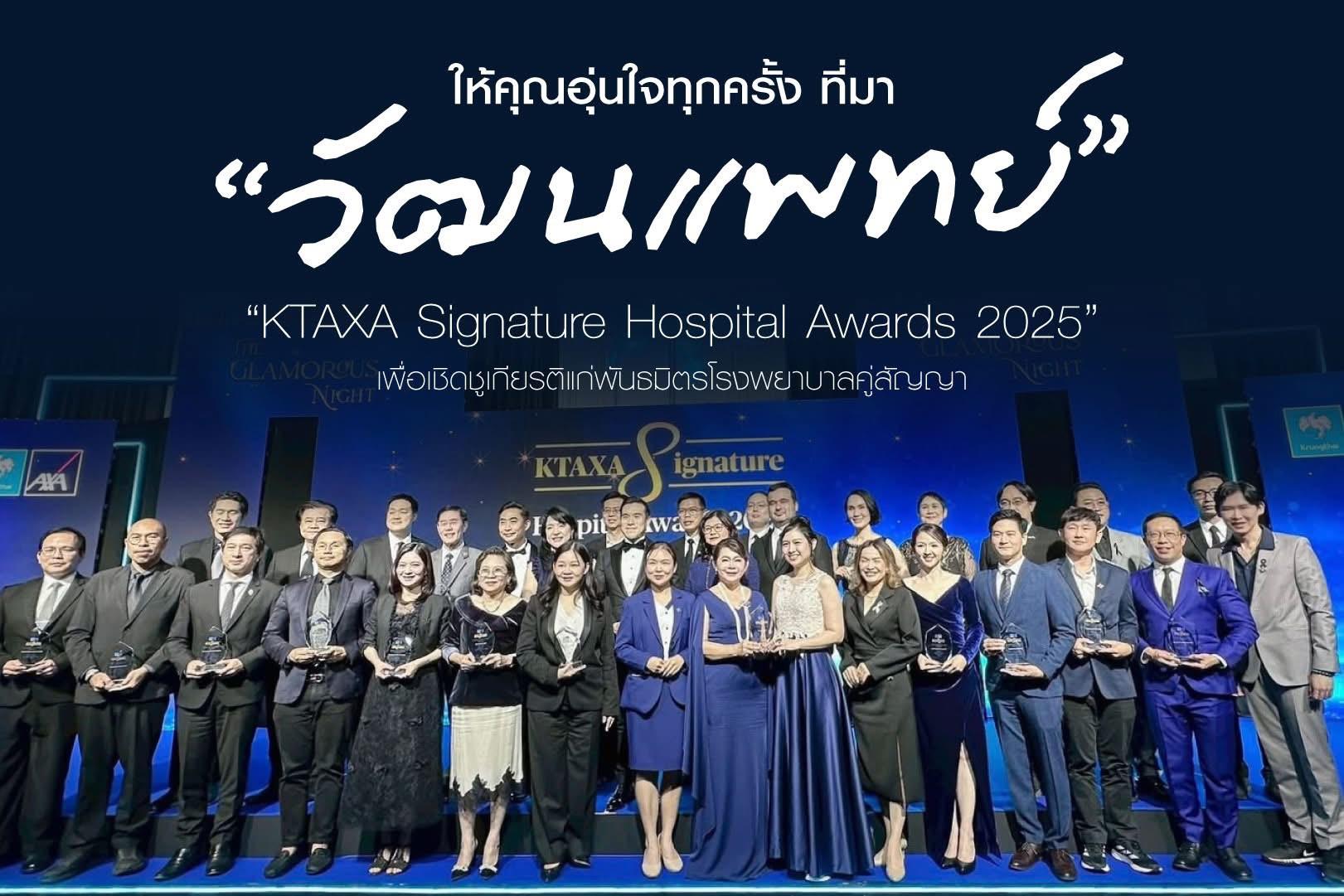
In 2025, the company received the "Best Healthcare Provider Partnership Award 2025". The company also has a proactive service policy to promote strong physical health among the public and organizes health promotion activities for community members, including basic health check-ups for communities, exercise venues, or as requested by various organizations. This also includes supporting personnel to provide knowledge on basic first aid, cardiopulmonary resuscitation (CPR) to the public, and providing medical equipment to community hospitals and schools, such as patient beds, IV poles, wheelchairs, etc.
7. Environmental Conservation
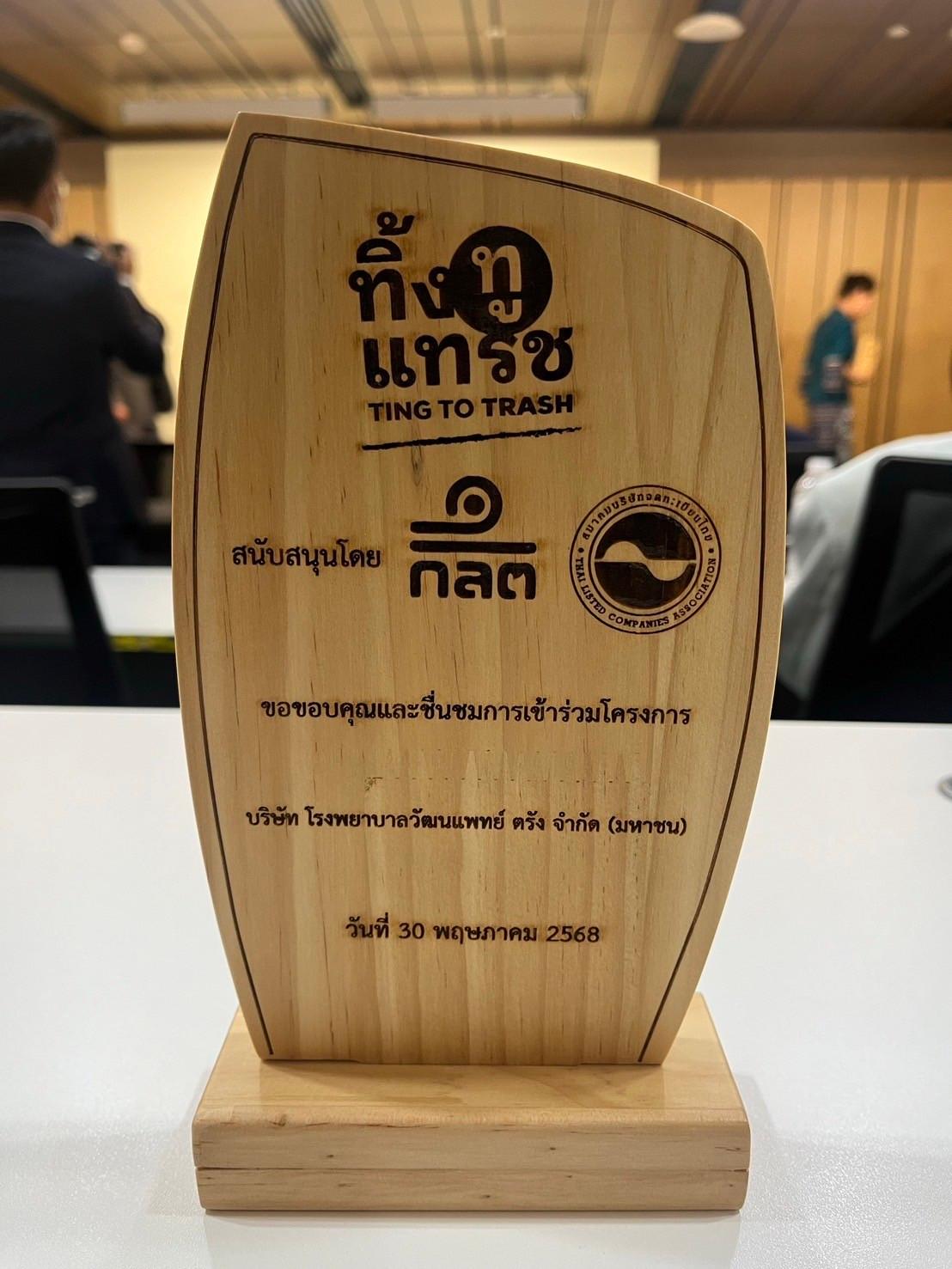
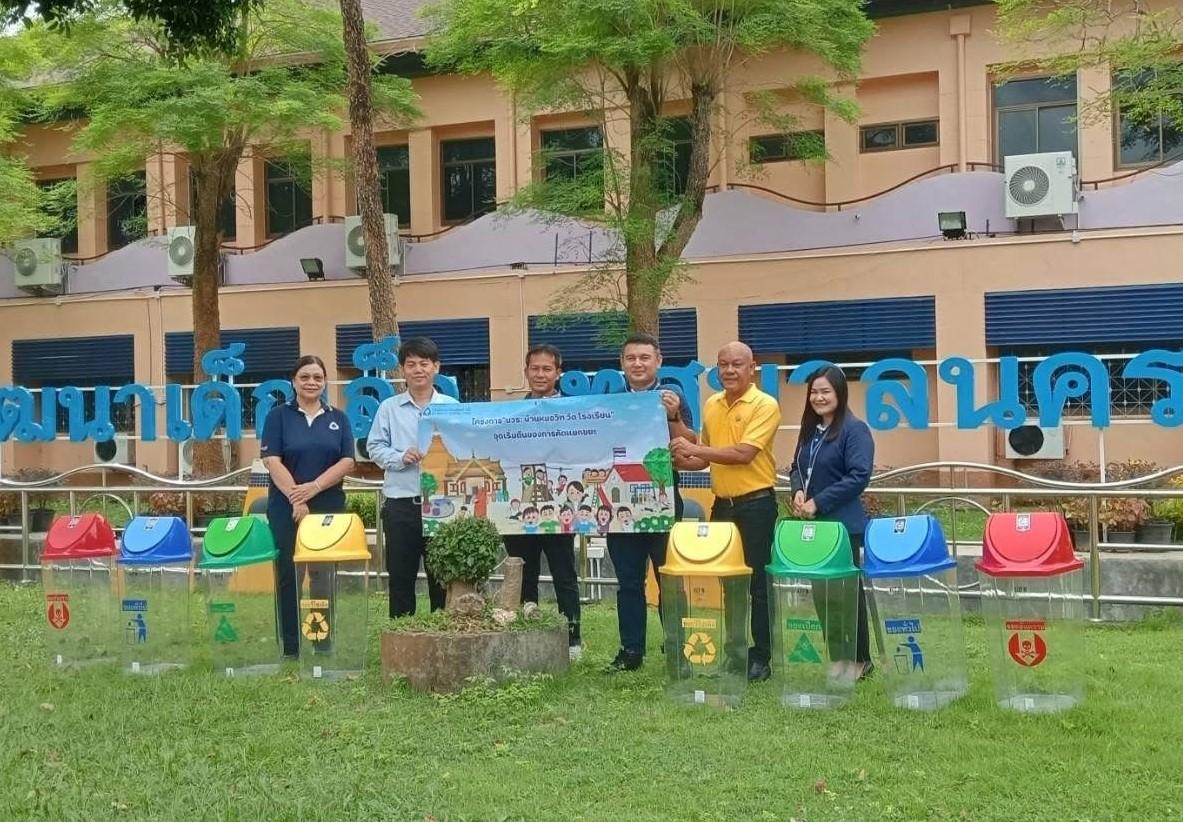
The company prioritizes social responsibility in environmental conservation. In addition to operating and controlling its healthcare facilities to strictly comply with environmental protection laws, such as consistently controlling wastewater treatment to standard before discharge into external systems, the company has driven environmental operations through 3 key projects, starting with elevating waste management standards within the organization through the project “Ting To Trash” in collaboration with the SEC and the Thai Listed Companies Association, ready to expand its impact to society through projects “Ba-Worn” to promote sustainable waste separation in collaboration with temples, schools, and internal employees. Additionally, the company has implemented a project to install a system of Solar Cells (Solar Rooftop) which helps reduce greenhouse gas emissions and efficiently manage energy costs, reflecting environmental responsibility alongside the creation of sustainable well-being.


8. Supporting Shareholder Engagement and Communication
The company recognizes and prioritizes the fundamental rights of shareholders, both as owners of the company and as investors in securities, such as the right to buy, sell, or transfer their held securities, the right to receive sufficient company information, the right to receive a share of the company's profits, various rights in shareholders' meetings, the right to express opinions, and the right to participate in important company decisions, such as dividend allocation, appointment or removal of directors, appointment of auditors, and approval of significant transactions affecting the company's business direction. In addition to the aforementioned fundamental rights, the company has also undertaken various actions to facilitate the exercise of shareholders' rights. In 2025, the company carried out the following:
- The company held its 2025 Annual General Meeting on April 24, 2025, in a hybrid format, which was within 4 months from the end of each fiscal year.
- The company provided an opportunity for shareholders to propose agenda items for the Annual General Meeting of Shareholders and nominate individuals for consideration as company directors for the 2025 Annual General Meeting, from November 1, 2024, to January 31, 2025.
- The company sent out meeting invitation letters along with supporting information for various agenda items to shareholders 21 days in advance of the meeting date (April 2, 2025). Each agenda item included the Board of Directors' opinions and sufficient supporting information to allow shareholders time to study the information in advance of the meeting. Furthermore, the company published this information on its website 28 days in advance of the shareholders' meeting (March 26, 2025).
- The company provided an opportunity for shareholders to submit comments, suggestions, or questions in advance of the meeting date, according to the criteria set by the company, by publishing such criteria on the company's website.
- In cases where shareholders are unable to attend the meeting in person, the company provided an opportunity for shareholders to appoint an independent director or any other person to attend on their behalf, using any proxy form provided by the company along with the invitation letter.
- At the 2025 Annual General Meeting, the company provided equal opportunities for all shareholders to express opinions, suggestions, or ask questions freely on relevant agendas before voting on any agenda. Relevant directors and executives of the company will attend the shareholders' meeting to answer questions.
- The company disclosed the voting results for each agenda item to shareholders via the SET Portal system of the Stock Exchange of Thailand on the day of the 2025 Annual General Meeting, after the meeting concluded.
- The company accurately and completely recorded the minutes of the meeting in all material respects, and will also record important questions, comments, and suggestions in the minutes of the meeting for shareholders' inspection.